12 Halloween Makeup for Kids in 2026: Cute, Easy & Creative Face Paint Ideas
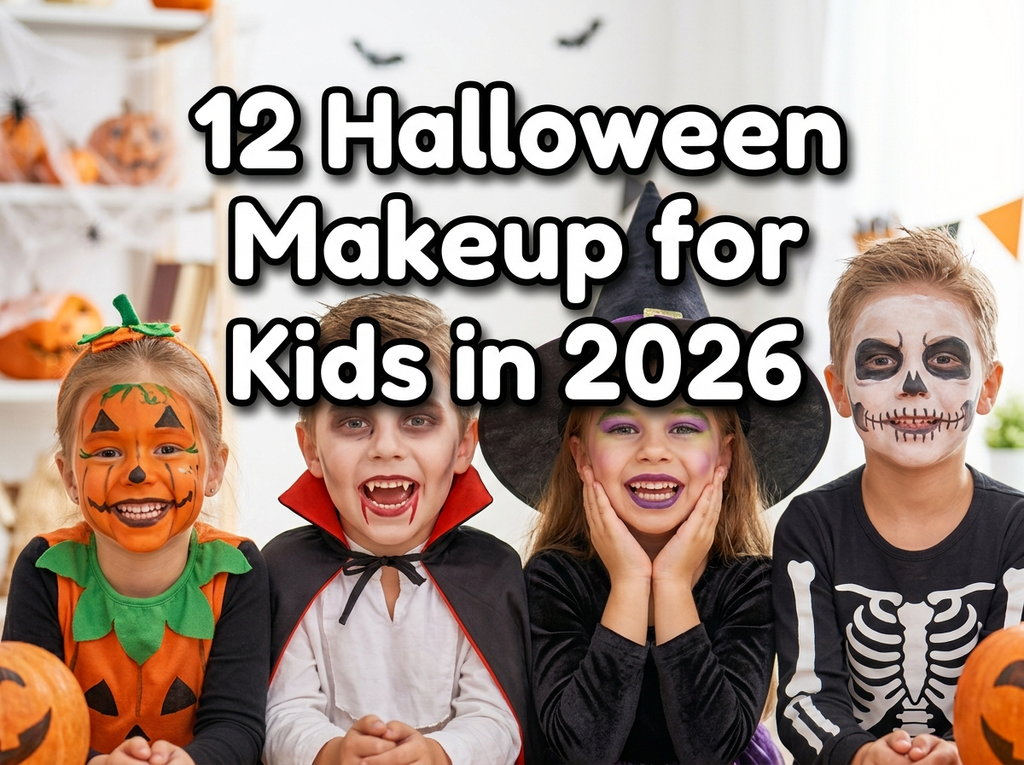
Halloween makeup for kids should be fun, comfortable, and simple enough to suit the child’s age and patience. Whether your child wants to look like a little pumpkin, a friendly cat, a magical fairy, or a spooky skeleton, the right face paint can complete a costume without requiring professional makeup skills.
This guide features 12 Halloween makeup looks for kids, including beginner-friendly designs, colorful face painting ideas, and creative options for school parties, trick-or-treating, and family Halloween celebrations. Each idea includes styling suggestions and a realistic image prompt for creating attractive visual inspiration.
1. Pumpkin Face Paint for Kids
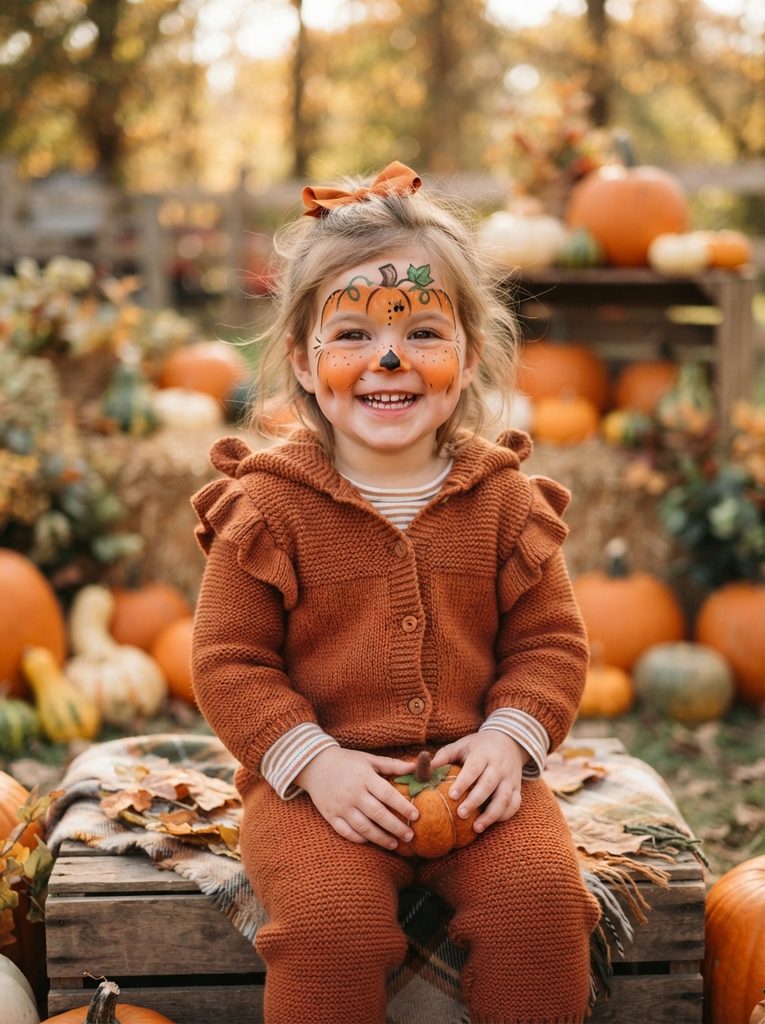
Pumpkin face paint is one of the most recognizable and cheerful choices for Halloween. It works particularly well for younger children who want a festive design without scary details or complicated makeup. The look can be created with orange face paint, a little black, and green accents around the forehead or cheeks.
For a simple pumpkin design, paint the child’s nose orange and add small black lines to create the appearance of pumpkin sections. Use orange across the cheeks or one side of the face, then add a small green leaf or stem near the forehead. A friendly smile and rounded eyes can make the design feel cute rather than frightening.
Parents can adapt this idea to match the child’s costume. A pumpkin sweatshirt, orange dress, black leggings, or a simple pumpkin-themed headband can complete the appearance. This is also a practical choice for school events because the design can remain small and comfortable.
Make the Pumpkin Design More Comfortable
Keep the paint away from the eyes and mouth, and use a small design if the child does not enjoy sitting still for long. Orange cheek details and a tiny pumpkin nose can create the same seasonal effect without covering the entire face.
2. Easy Halloween Makeup Looks for Kids: Cute Cat Face Paint
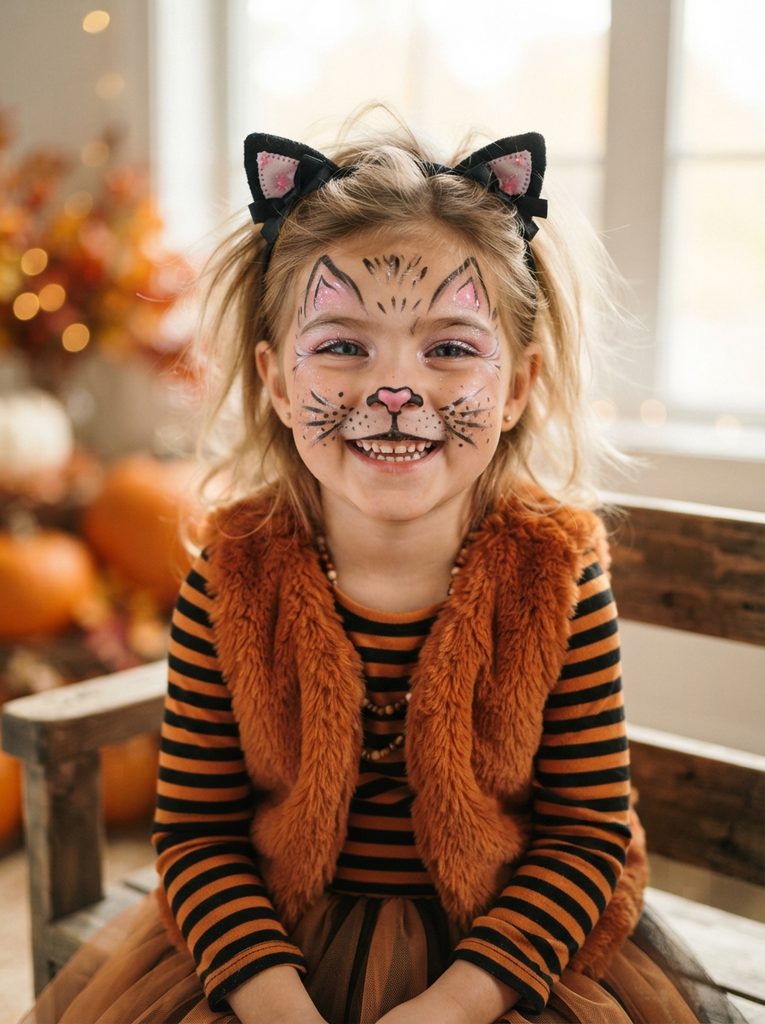
A cat face is one of the easiest Halloween makeup looks for kids because it requires only a few simple details. You can create the design with black face paint or a cosmetic pencil intended for the skin, making it a good option for beginners who want a quick costume finish.
Start with a small black nose, then draw thin whiskers across the cheeks. Add a few short lines above the eyebrows to suggest cat markings. If the child enjoys colorful makeup, you can include pink inner ears on the forehead or a small amount of white paint around the nose.
The design can be adjusted for different ages. Younger children may prefer a small nose and whiskers, while older kids might enjoy a more detailed tiger, leopard, or magical cat-inspired look. A headband with cat ears can complete the costume without requiring complicated face painting.
Add Details Without Overdoing It
Use a limited number of lines and avoid pulling the skin while applying paint. If the child is sensitive to products around the eyes, keep the design on the cheeks, nose, and forehead instead of adding eyeliner or heavy eye makeup.
3. Friendly Ghost Face Paint for Halloween
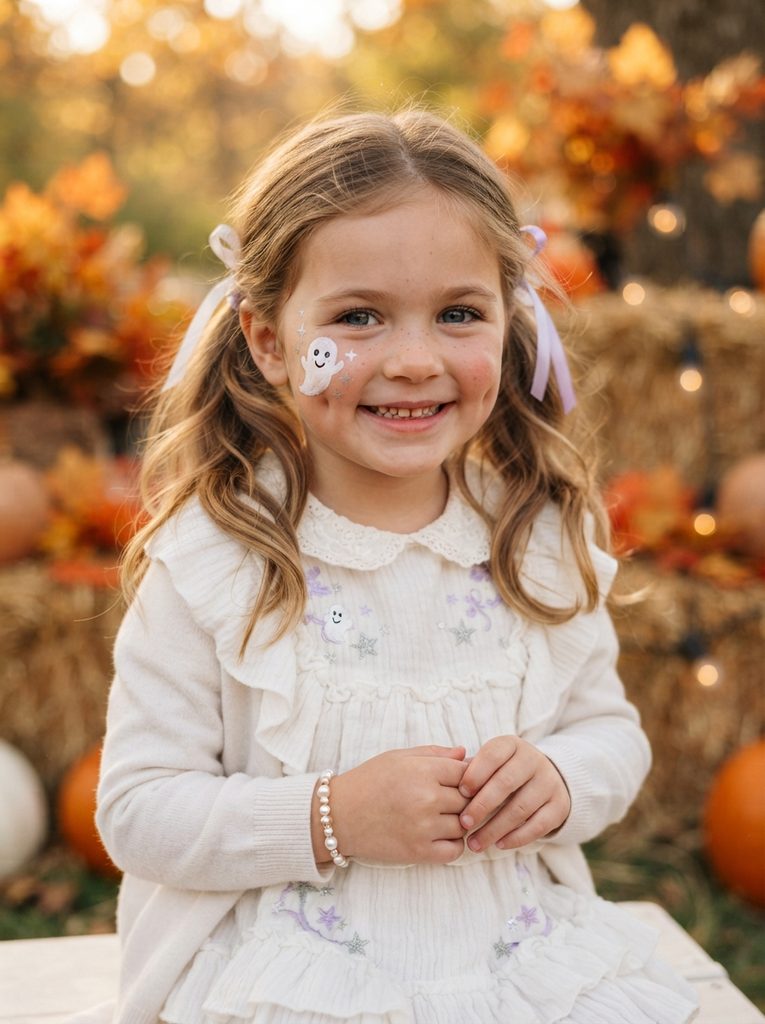
A friendly ghost is a simple face painting idea for kids Halloween celebrations, especially for children who want a spooky theme without frightening makeup. Instead of covering the entire face with white paint, use a few pale details combined with soft gray or black accents.
One easy version involves painting a small white ghost shape on one cheek. Add two black eyes and a tiny curved mouth to make it look cheerful. Another option is to use white face paint around the cheeks and forehead, then draw small ghost shapes near the temples. These designs are easy to personalize and can be paired with a white shirt, ghost costume, or light-colored outfit.
For children who dislike full-face makeup, a single ghost on the cheek is often enough to create a Halloween-inspired appearance. It also takes less time to apply and remove, which can be helpful before school parties or trick-or-treating.
Try a Cute Ghost Instead of a Scary One
Rounded eyes, a small smile, and soft outlines create a friendly expression. Avoid adding dark, dramatic shadows if the child prefers a cute design. You can also use tiny stars or dots around the ghost to give the face paint a playful finish.
4. Halloween Face Paint Ideas for Kids: Little Butterfly
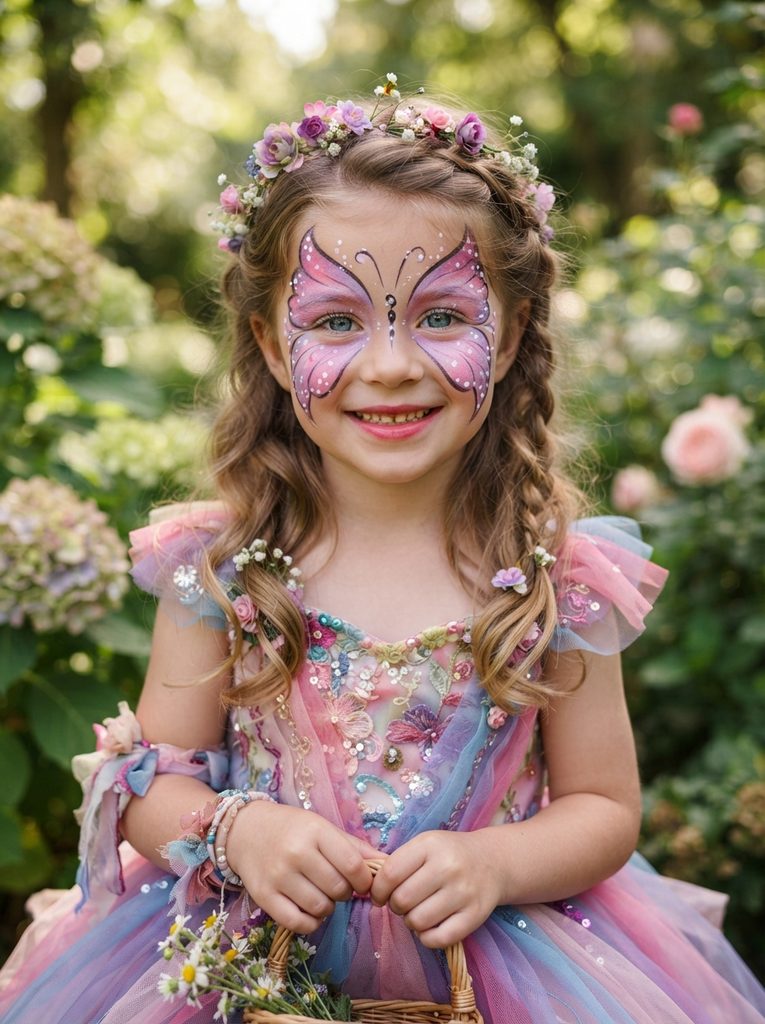
Butterfly face paint is a colorful choice for children who prefer a magical or pretty Halloween costume. The design can be as simple or detailed as the child wants. Beginners can create two rounded wings around the eyes or cheeks, while more experienced parents can add outlines, dots, and small decorative patterns.
Choose two or three colors that work well together, such as pink and purple, blue and silver, or orange and yellow. Paint the wings on the outer cheeks and extend them slightly toward the temples. A small black or white outline can define the shape, while a few dots add a finished appearance.
The butterfly theme works with fairy costumes, colorful dresses, wings, or even everyday clothing if the child only wants face paint. It is also a flexible option for siblings because each child can choose a different color combination while keeping the same overall design.
Choose Soft Colors for a Delicate Look
A pastel palette creates a gentle appearance, while darker outlines produce a more dramatic effect. Use face paint that is intended for skin, and avoid placing decorative pigment directly on the eyelids unless the product is specifically approved for that area.
5. Easy Face Paints for Kids: Friendly Spider Design
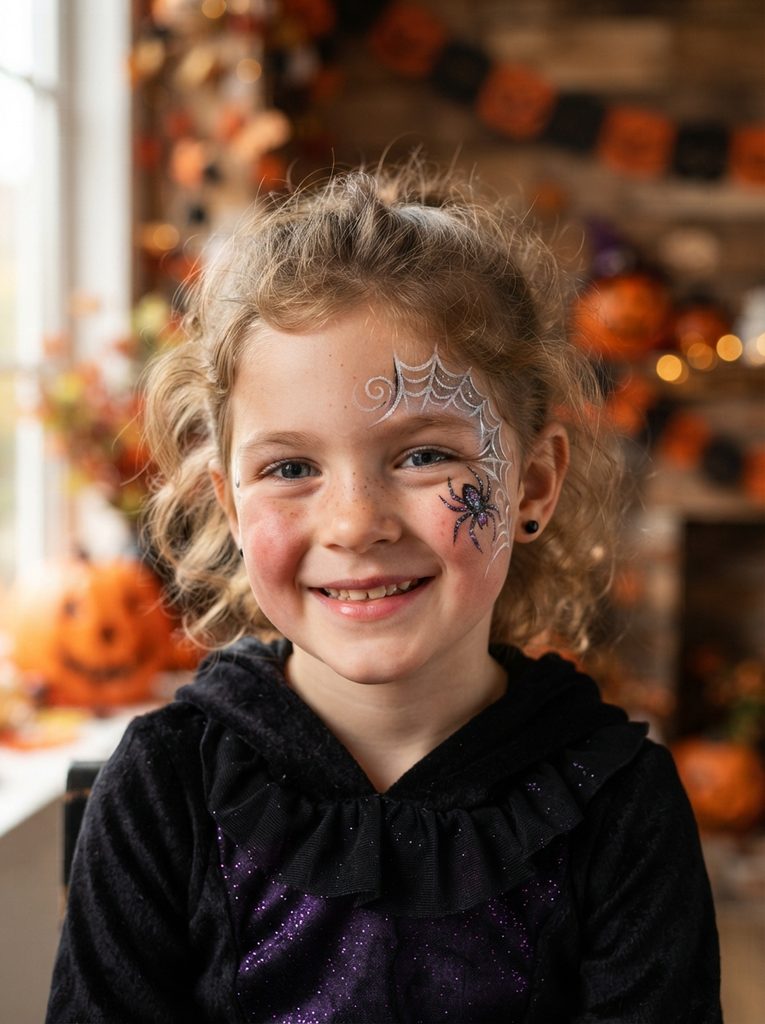
A small spider design can create a Halloween look without making the child’s entire face appear frightening. This idea is suitable for children who like spooky themes but prefer a quick and simple application. The spider can be painted on one cheek, near the forehead, or on the back of the hand as a matching costume detail.
Begin by drawing a small black oval for the spider’s body. Add thin legs with a fine face-paint brush, then use white dots for the eyes. For a more colorful version, create a purple, red, or glitter-free blue spider instead of using only black.
You can pair the design with a spider costume, black clothing, or a small web pattern. If the child wants a stronger Halloween effect, add a simple web on the opposite cheek. Keep the lines thin and spaced apart so the design remains clear.
Keep the Spider Small and Clear
A simple spider with well-defined legs often looks more polished than a large design with too many details. Let the child choose the placement and stop if they become uncomfortable during application.
6. Halloween Kids Makeup Easy: Mini Skeleton Face Paint
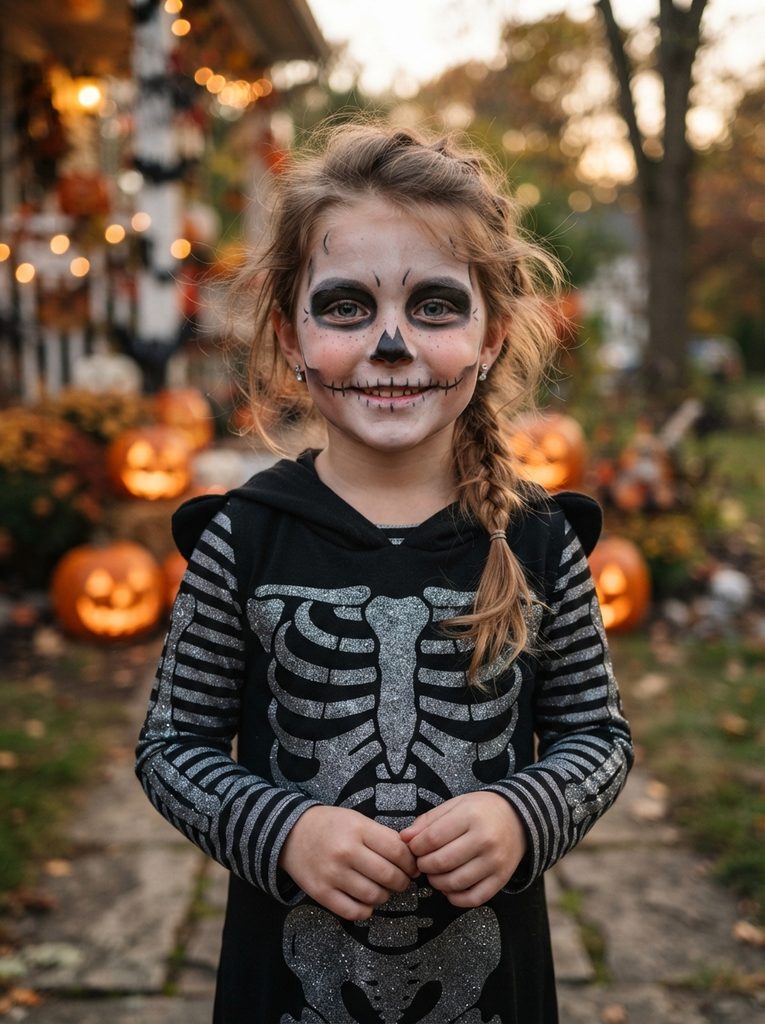
Skeleton face paint can be adapted into a child-friendly design by using only a few recognizable details. A full skeleton face may take longer to apply, but a mini version can be created with a dark nose shape, small cheek lines, and lightly shaded eyes. The result looks spooky while remaining simple enough for a home costume.
For a beginner-friendly version, paint a small black triangle on the nose and add short vertical lines near the corners of the mouth to imitate skeleton teeth. You can also add a small curved line beneath each eye instead of covering the entire eye area with dark paint.
The design works with black, white, gray, or silver clothing. If the child wants a more colorful appearance, use purple or blue accents around the cheekbones. A skeleton hoodie or simple black outfit can make the face paint the main feature of the costume.
Use a Small Amount of Face Paint
Avoid applying heavy products around the eyes or covering the whole face if the child has sensitive skin. A few well-placed details can communicate the skeleton theme while keeping the design easier to remove.
7. Simple Face Painting Ideas for Halloween: Rainbow Cheeks
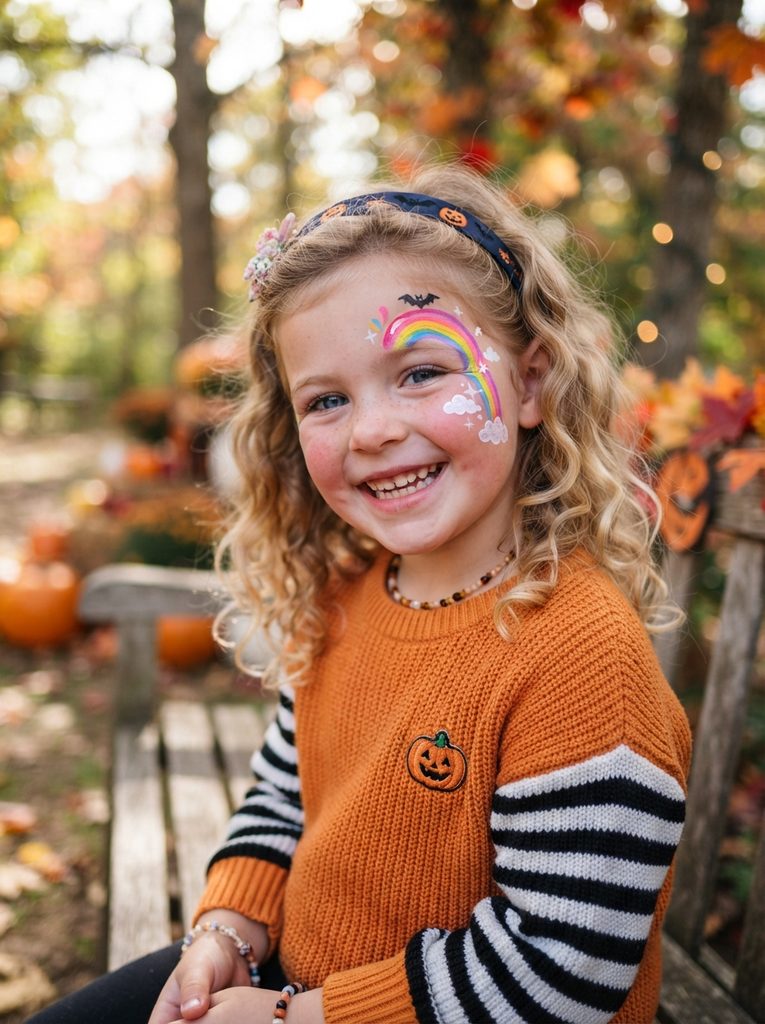
Rainbow cheek paint is a bright and playful option for children who do not want a traditional scary Halloween design. It can be created with curved lines in a few colors, small stars, clouds, or glitter-free highlights. The design is especially suitable for colorful costumes, unicorn outfits, fairies, and rainbow-themed accessories.
To create a simple version, paint three or four curved lines across one cheek. Use colors such as pink, yellow, blue, and purple, leaving a little space between each stripe. Add two small white clouds at the ends or place tiny dots above the rainbow for extra detail.
The design can be applied to one cheek or repeated on both sides. For a coordinated sibling look, each child can choose a different rainbow color combination. This makes it easy to create individual designs while maintaining a shared Halloween theme.
Make the Rainbow Look Neat
Use a fine brush and apply the colors in short sections instead of trying to draw one long line immediately. Let each color sit neatly beside the next, and avoid using loose craft glitter on the face.
Quick Planning Tips Before Applying Kids’ Halloween Face Paint
The best kids Halloween face paint designs are not necessarily the most complicated. A small, clean design can be more enjoyable for a child than a full-face application that takes too long. Before starting, consider the child’s age, skin sensitivity, costume, and how long they can comfortably sit still.
A few helpful preparations include:
- Clean the child’s face gently before applying any product.
- Use face paints that are made for skin and follow the label instructions.
- Keep products away from the eyes unless they are specifically intended for that area.
- Test an unfamiliar product on a small area of skin before the event.
- Use clean brushes and avoid sharing products directly between children.
- Stop immediately if the child experiences itching, burning, redness, or discomfort.
- Remove the makeup gently after the celebration using the product’s recommended removal method.
For official guidance on novelty makeup, parents can consult the U.S. Food and Drug Administration’s Halloween face paint safety advice . The FDA advises using products intended for skin, following directions, keeping unsuitable products away from the eyes, and testing unfamiliar makeup before applying it to the face.
8. Tiger Face Paint for Kids
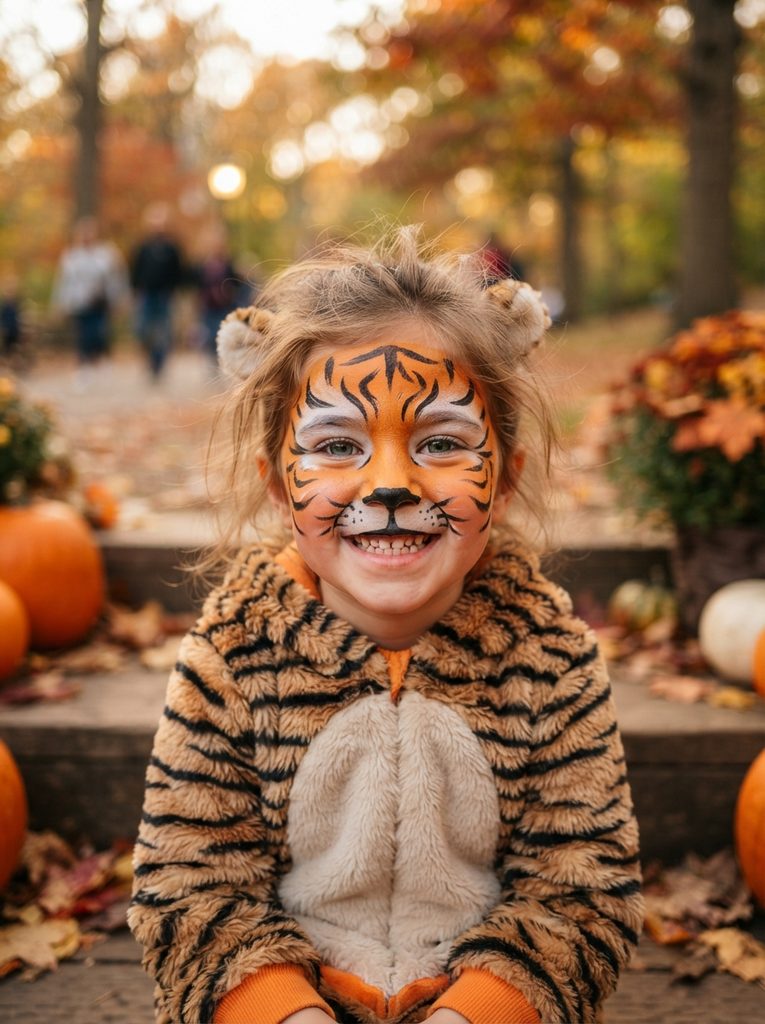
Tiger face paint is a fun choice for children who want an animal-inspired Halloween costume. It can look detailed, but the basic design is simple enough for parents who are trying face painting for the first time. Orange, black, and white are the traditional colors, although a purple or blue tiger can create a more imaginative appearance.
Start by adding orange paint to the cheeks and forehead, leaving the area around the eyes relatively clear. Use black paint to draw short stripes along the forehead, cheeks, and sides of the nose. A small amount of white paint around the mouth can create contrast and make the design look more complete.
This idea works with tiger costumes, animal-print clothing, or a simple orange and black outfit. If your child wants a softer appearance, use rounded stripes and a small black nose. For an older child, sharper lines and stronger contrast can create a more dramatic animal look.
Keep the Stripes Simple
Do not try to create too many stripes at once. Begin with a few balanced lines, then add more if needed. Use a clean brush for each color and allow the child to take breaks during the application.
9. Halloween Face Painting Kids: Magical Unicorn Design
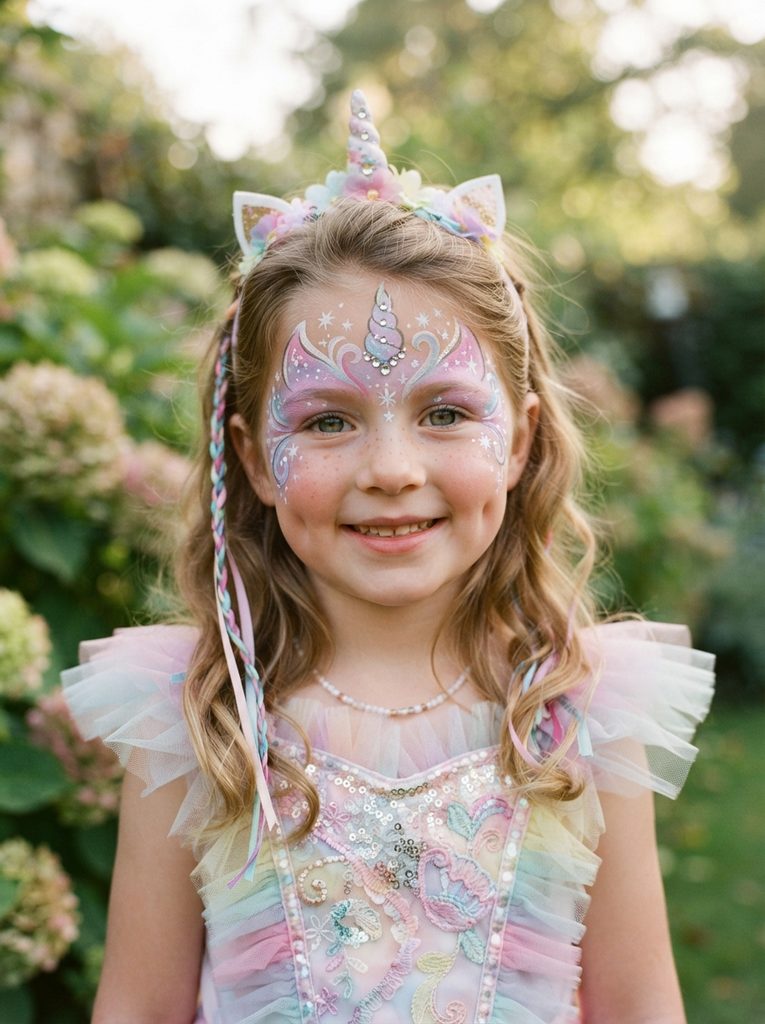
A unicorn face-paint design is ideal for children who prefer colorful, imaginative Halloween makeup. The look can include pastel pink, lavender, blue, and white, with small stars or a decorative horn shape on the forehead. It can be paired with a unicorn costume, colorful dress, or simple headband.
For an easy version, paint a soft pastel shape across the cheeks and add a few white dots near the temples. A small gold or silver horn can be drawn on the forehead, provided the product is intended for facial use and is applied away from the eyes. You can also add a small amount of color to the nose for a playful finish.
The design does not need to cover the whole face. A few pastel details can create a recognizable unicorn theme while allowing the child’s natural facial features to remain visible. This makes it a useful option for parties where the child may be wearing the makeup for several hours.
Use a Coordinated Color Palette
Choose two or three colors instead of applying every shade available. Pastel pink with lavender, or blue with silver, can create a more balanced design. Avoid loose craft glitter and use only cosmetic products designed for the intended area.
10. Kid Halloween Face Paint Ideas: Little Witch
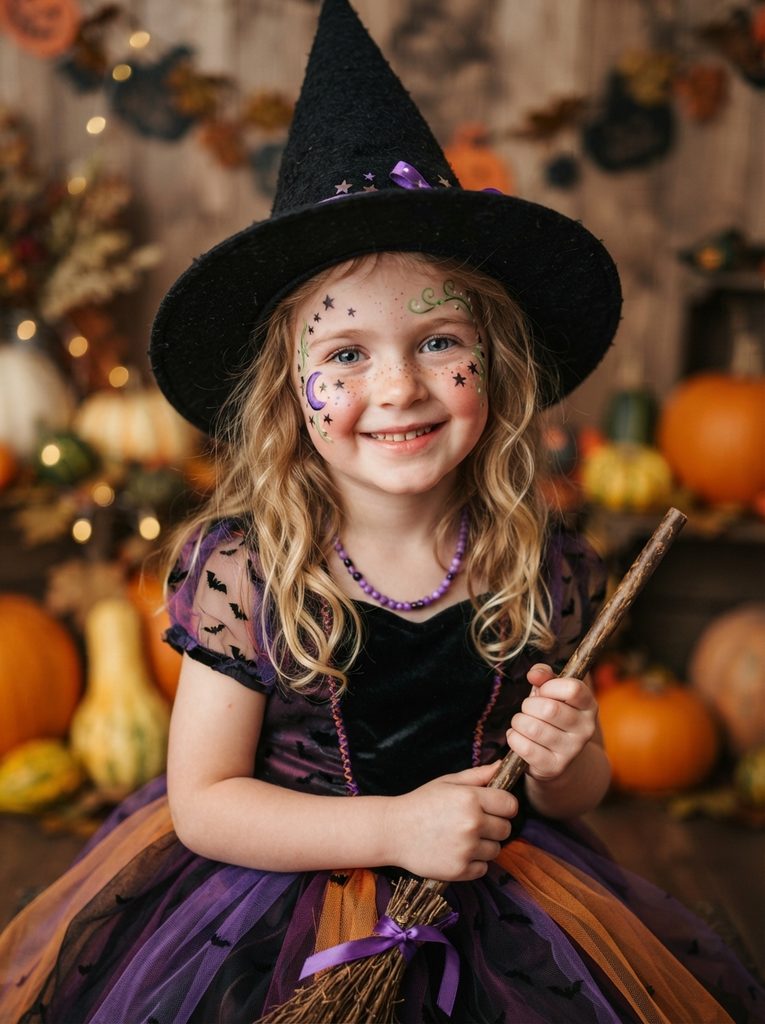
A little witch face-paint design can be cute, mysterious, or slightly spooky depending on the colors and details. It is a practical option for children wearing witch hats, black dresses, capes, or purple and green Halloween costumes.
A simple design can include a small black star on the cheek, a purple nose detail, and a few tiny dots near the forehead. Older children may enjoy a more detailed look with a painted spiderweb, crescent moon, or decorative eyebrows. You do not need to use heavy makeup or dark products around the eyes to make the costume recognizable.
To create a cohesive outfit, match the face-paint colors with the costume. Purple and black create a classic witch-inspired appearance, while green and orange can give the look a more playful Halloween feel.
Create a Friendly Witch Look
Rounded shapes and small decorative details help keep the design suitable for younger children. A tiny moon or star can be more comfortable than a large full-face design. Let the child choose whether they want a cute, colorful, or spooky style.
11. Kids Face Paint Halloween: Ladybug Design
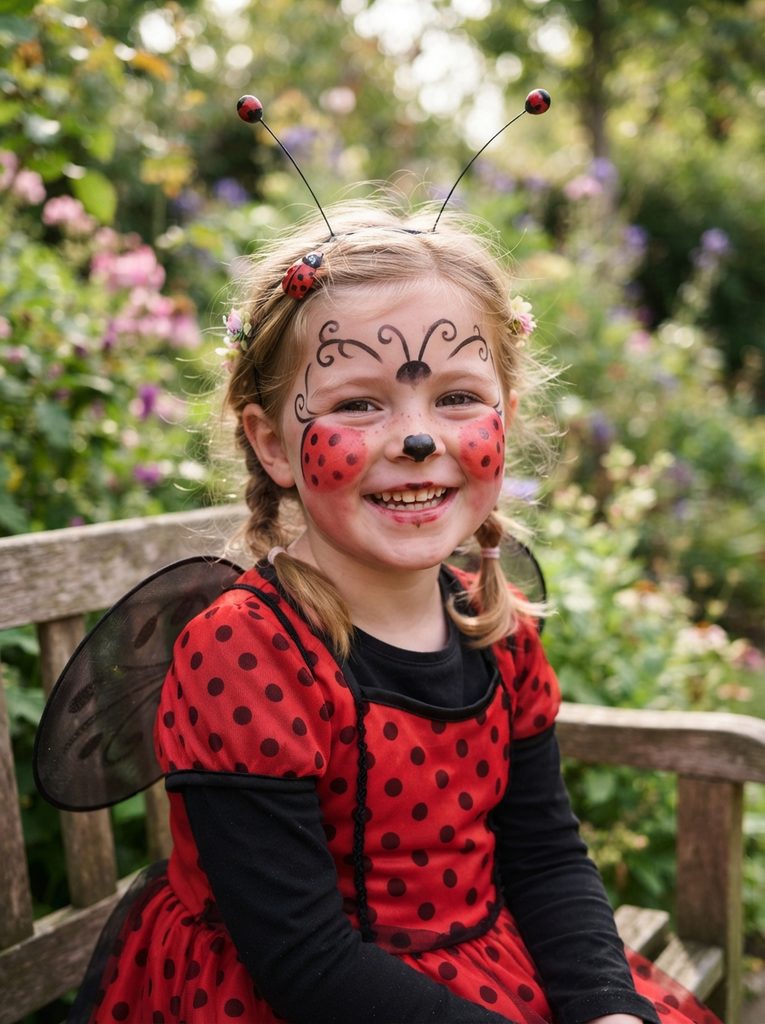
A ladybug face-paint design is a colorful and easy choice for children who enjoy animal costumes. The classic palette includes red, black, and white, but you can also create a pink or purple version for a more imaginative look.
Paint a small red shape on one cheek or across both cheeks. Add a few black dots to represent the ladybug’s wings, then use black paint for a tiny head or antennae near the forehead. White dots can be added around the design to make it look more decorative.
This design works well with a ladybug costume, red clothing, black accessories, or simple wings. It is also suitable for siblings because each child can choose a different color while keeping the same basic pattern.
If you want to include other small details, pair the face paint with a neat hairstyle or a themed accessory. For hairstyle inspiration, you can explore these headband hairstyles and select an option that works comfortably with the child’s costume.
Use Small Shapes for Younger Children
A small ladybug on one cheek is often enough to complete the theme. Avoid making the application unnecessarily long, especially if the child is young or becomes uncomfortable sitting still.
12. Easy Halloween Face Paints for Kids: Scary or Cute Clown
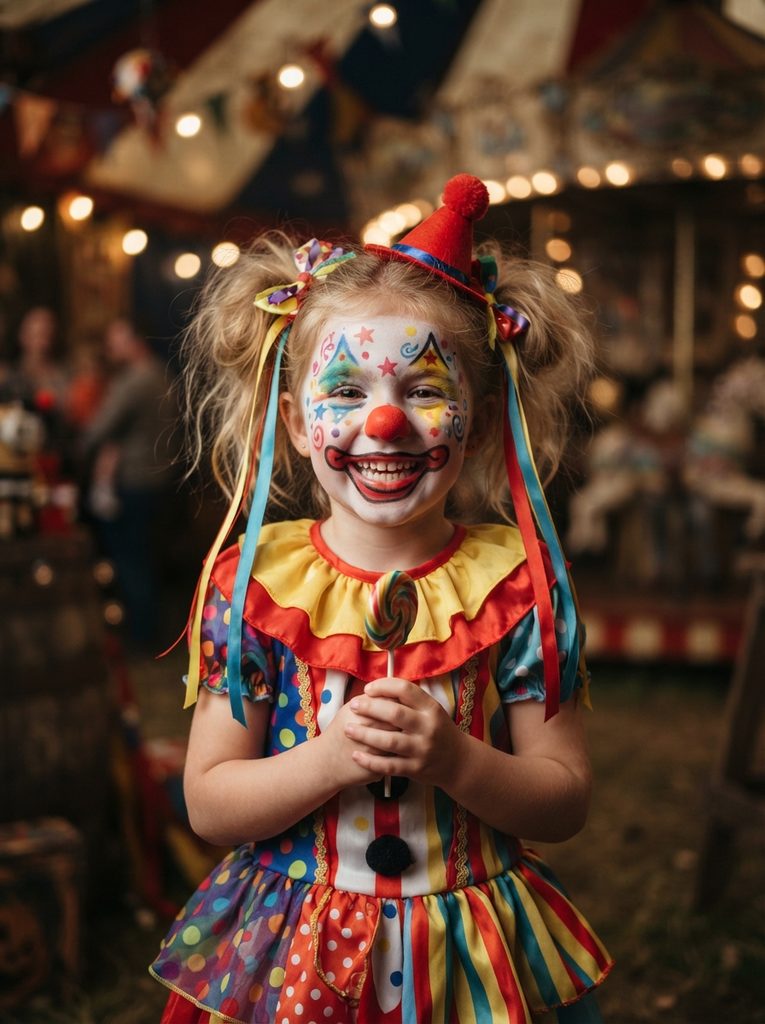
Clown face paint can be adapted to suit different ages and preferences. Some children enjoy a bright circus clown, while others prefer a spooky Halloween version with black, white, and red details. The design can be kept simple by focusing on the nose, cheeks, and mouth.
For a cute clown look, add a red or pink nose, rounded cheek circles, and small decorative lines near the eyes. For a darker version, use black and white face paint with sharper shapes and a stronger lip outline. Parents should avoid using products around the eyes unless the label specifically allows that application.
The costume can include a colorful shirt, suspenders, a bow tie, or a clown wig designed for children. If the child does not want a full-face design, a painted nose and two cheek details can still create a recognizable clown appearance.
Let the Child Choose the Intensity
Ask whether the child wants a funny, colorful, or spooky clown. This helps you choose the right colors and prevents the makeup from becoming too frightening. Start with small details and build the look gradually.
Safety Tips for Halloween Makeup for Kids
Face paint can add personality to a costume, but children’s skin requires careful consideration. Use products intended for cosmetic application, read the label, and avoid using craft paints or materials that are not designed for skin.
The FDA explains that Halloween makeup is treated as a cosmetic product and that color additives must be permitted for their intended use. Its Halloween safety guidance also recommends testing makeup ahead of time on a small area of skin and checking for signs of irritation before applying it more widely.
Keep these precautions in mind:
- Test new face paint approximately 24 to 48 hours before the event.
- Check the ingredients and follow the manufacturer’s instructions.
- Do not apply unsuitable pigments near the eyes or lips.
- Avoid makeup on broken, irritated, or inflamed skin.
- Wash hands before applying face paint.
- Use clean brushes and avoid sharing makeup directly.
- Remove the makeup after the event according to the product instructions.
- Stop using a product if burning, itching, redness, or swelling occurs.
- Ask a healthcare professional for advice if a significant reaction develops.
Parents should also consider the child’s comfort. A small cheek design may be a better choice than full-face paint if the child dislikes the feeling of makeup or needs to wear the costume for an extended period.
How to Match Kids’ Halloween Makeup With the Costume
A well-matched costume does not require every detail to use the same color. Instead, choose one or two shades from the outfit and repeat them in the face paint. This creates a coordinated appearance without making the costume look overly planned.
For example, a pumpkin costume can use orange and green face paint. A witch costume can include purple stars or a small black moon. A butterfly outfit can use colors that match the wings. If the child is wearing a simple black outfit, colorful face paint can become the main visual detail.
Accessories can also support the overall look. A headband, hat, cape, wings, or themed hairstyle can make a simple design feel more complete. For children who prefer a more polished outfit, keep the face paint small and use the costume accessories to create the main character.
Frequently Asked Questions
What is the easiest Halloween makeup for kids?
Some of the easiest options include cat whiskers, a small pumpkin nose, rainbow cheeks, a friendly ghost, and a simple spider. These designs require fewer products and can usually be completed in a short period.
What face paint is safe for children?
Choose face paint made specifically for cosmetic use and follow the product’s directions. Check the ingredient information and intended application area. Avoid craft paint, acrylic paint, and products that are not designed for use on skin.
How can I make Halloween face painting easier for kids?
Prepare the brushes, colors, and reference image before beginning. Start with a small design, allow breaks, and let the child choose the colors or placement. A simple design that the child enjoys is often more successful than a complicated one.
Can children wear face paint around their eyes?
Only use a product around the eyes if its label specifically permits that use. Some color additives and face paints may not be suitable for the eye area. Keep decorative details away from the eyes when the product’s intended use is unclear.
How long should kids’ Halloween face paint stay on?
Follow the product’s instructions and remove the makeup after the event. Do not leave face paint on longer than recommended, especially if the child experiences discomfort. Remove it gently rather than scrubbing the skin.
What can I do if my child does not want full-face makeup?
Choose a small cheek design, painted nose, tiny stars, or a single themed symbol. These details can complement the costume without covering the entire face. Face paint should be optional and comfortable for the child.
Conclusion
The best Halloween makeup for kids in 2026 combines creativity, comfort, and a design that matches the child’s personality. Pumpkin cheeks, cat whiskers, butterflies, friendly ghosts, rainbows, and animal-inspired face paint are all flexible options for Halloween parties and trick-or-treating.
For a quick application, choose one or two colors and focus on a small area of the face. If your child enjoys detailed designs, you can add stripes, stars, webs, or decorative shapes gradually. Always use products intended for skin, test unfamiliar makeup in advance, and avoid unsuitable products around the eyes.
Whether your child wants a cute pumpkin design or a colorful unicorn look, a simple face-paint idea can make the Halloween costume feel special without requiring complicated techniques.