15 Fulani Braid Hairstyles to Show Your Braider Before Your Next Appointment
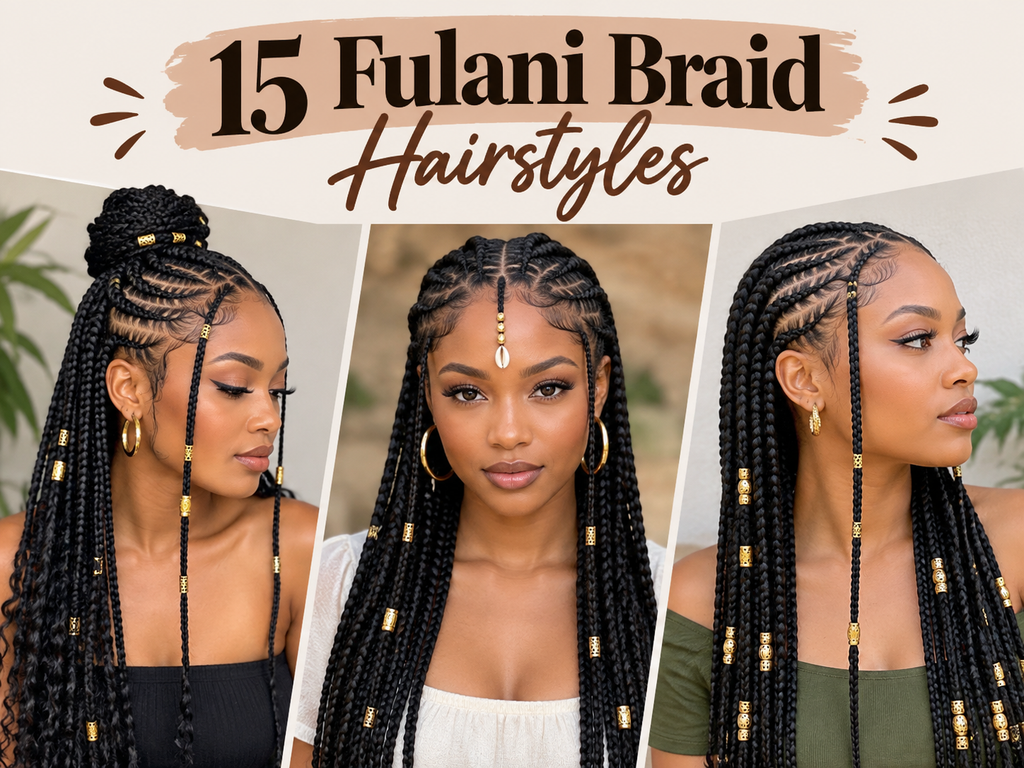
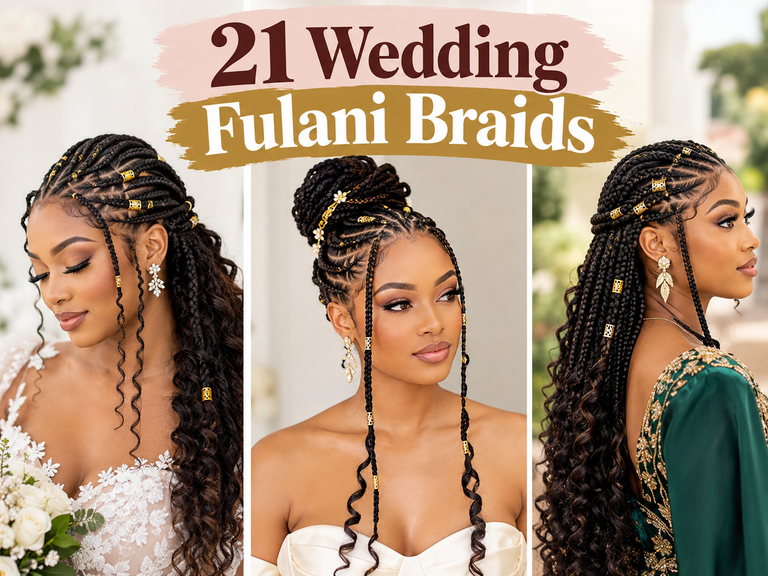
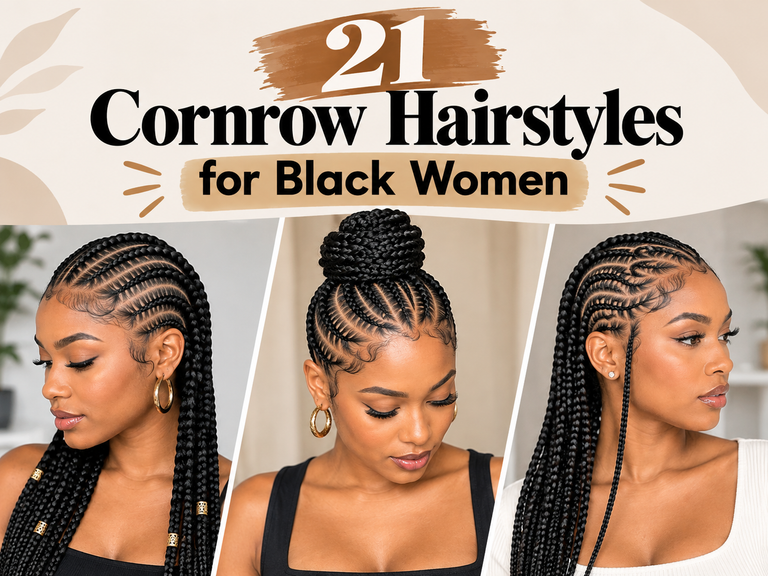
Fulani braid hairstyles are known for their distinctive combination of cornrows, individual braids, center or side parting, face-framing details, and decorative accessories. The style is connected to the Fulani people of West Africa and the Sahel, and modern versions continue to reinterpret those recognizable elements in different ways.
Today, you will find everything from classic beaded patterns to knotless Fulani braids, boho curls, goddess textures, geometric parts, colorful extensions, ponytails, and elegant buns. That variety makes Fulani braids especially useful when you want a hairstyle that feels personal rather than choosing one fixed pattern.
Before choosing your next look, pay attention to the braid direction, center part, length, accessory placement, and how much weight the finished style will carry. These details can completely change the final appearance.
1. Classic Fulani Braids With a Center Part
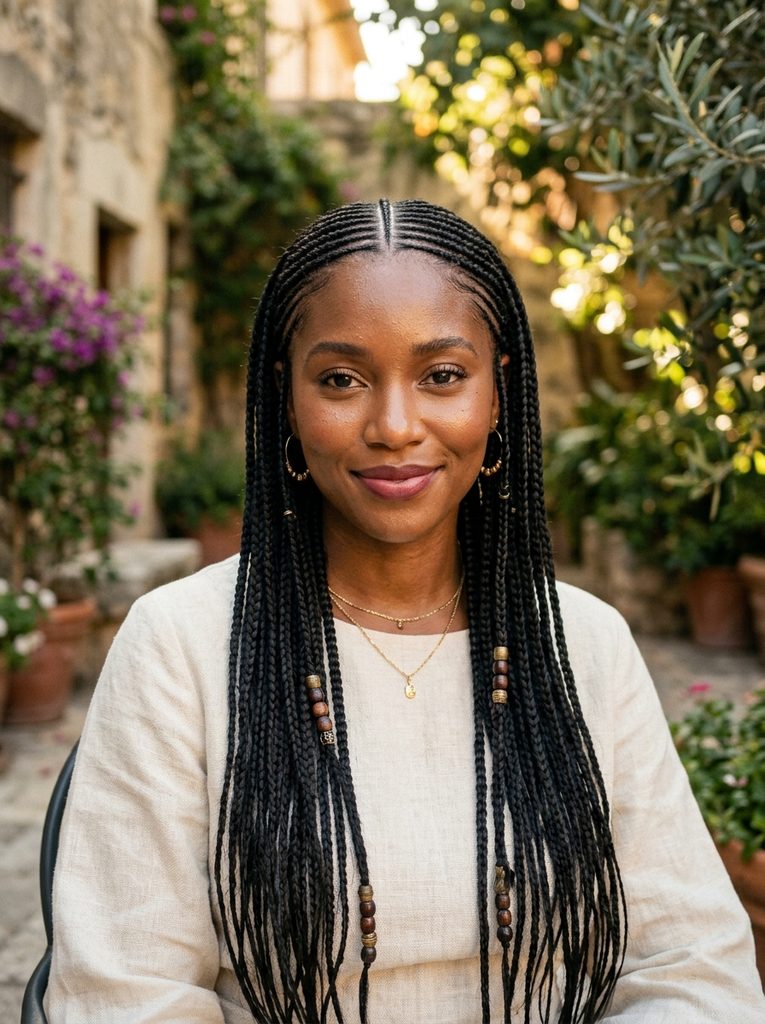
The classic center-part Fulani braid style is a beautiful starting point if you want the recognizable structure of the hairstyle without adding too many modern details. A clean central braid or part creates the foundation, while smaller cornrows can angle toward the sides and individual braids fall around the head.
Beads placed on selected braids complete the look without making it overly complicated. The result feels polished enough for everyday wear but can also work beautifully with formal clothing.
Make the Center Part the Focus
Ask your braider to map the center section before starting the rest of the pattern. A clean center line gives the hairstyle a more intentional appearance.
2. Fulani Braids With Gold Beads
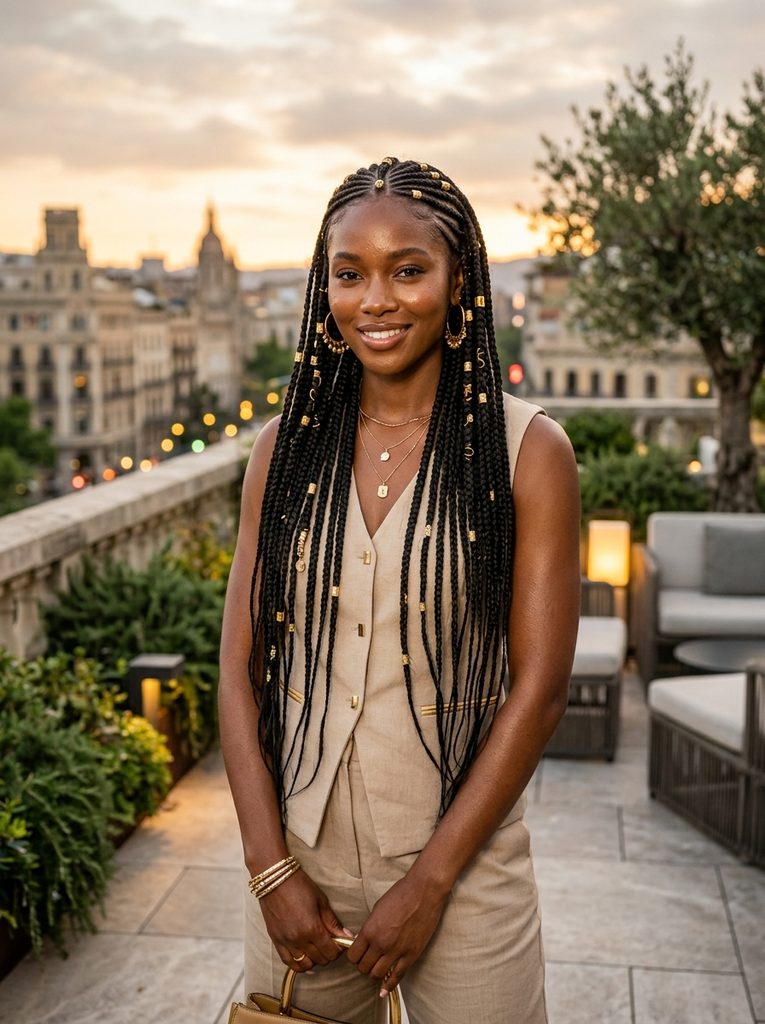
Gold beads can instantly make Fulani braids feel more polished and luxurious. You can place them on the ends of the face-framing braids, along selected individual braids, or use a few metallic accents near the center pattern.
The key is balance. The beads should complement the braid design rather than cover it. This makes the style easy to wear with simple outfits where the hair becomes the main statement.
Coordinate the Metal
Gold beads pair naturally with gold earrings, necklaces, or other warm-toned accessories. You do not need a large amount of jewelry to create a finished look.
3. Knotless Fulani Braids With Long Length
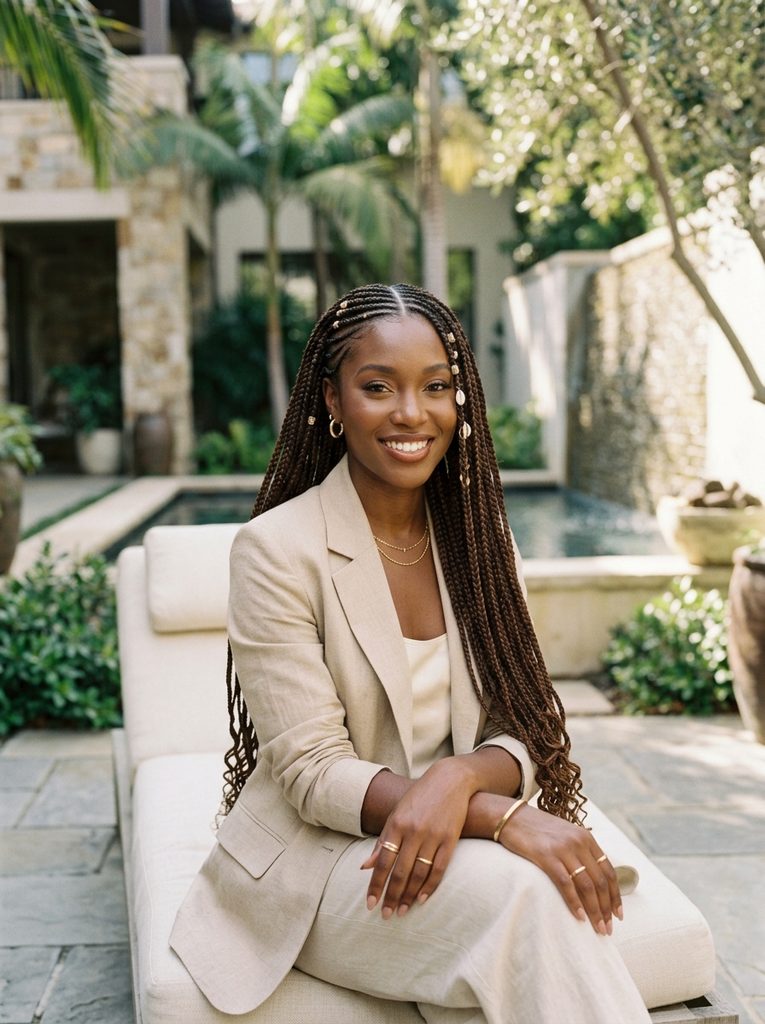
Knotless techniques can be incorporated into modern Fulani designs to create a flatter-looking base and a more gradual transition into the braid. The result can feel especially clean when paired with long individual braids at the back.
This is a useful option if you like the Fulani pattern but prefer a more contemporary finish. You can keep the color natural or introduce subtle brown or caramel pieces.
Think About the Total Weight
A knotless installation is not automatically lightweight. The final weight still depends on braid size, extension amount, length, and the technique used by your stylist.
Discuss those details before choosing an extremely long version.
4. Fulani Braids With Boho Curls
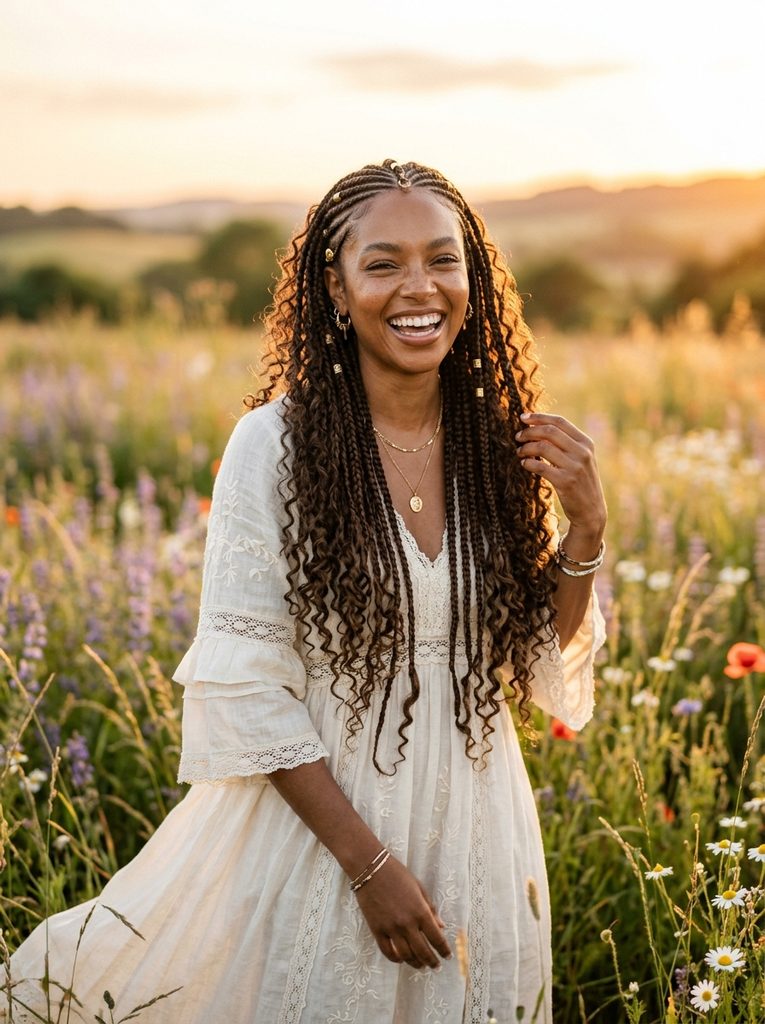
Adding loose curls to a Fulani braid pattern creates a softer, more relaxed interpretation of the style. The front and crown remain structured while curly pieces introduce movement around the face and through the longer lengths.
This combination has become a prominent modern variation, especially for people who want the recognizable Fulani structure without an entirely sleek finish.
Keep the Front Structured
Let the curls provide softness, but keep the main cornrow pattern clean. That contrast is what makes the style immediately recognizable.
For another braid style with relaxed texture, see Boho Braids for Long Hair.
5. Fulani Braids With Face-Framing Pieces
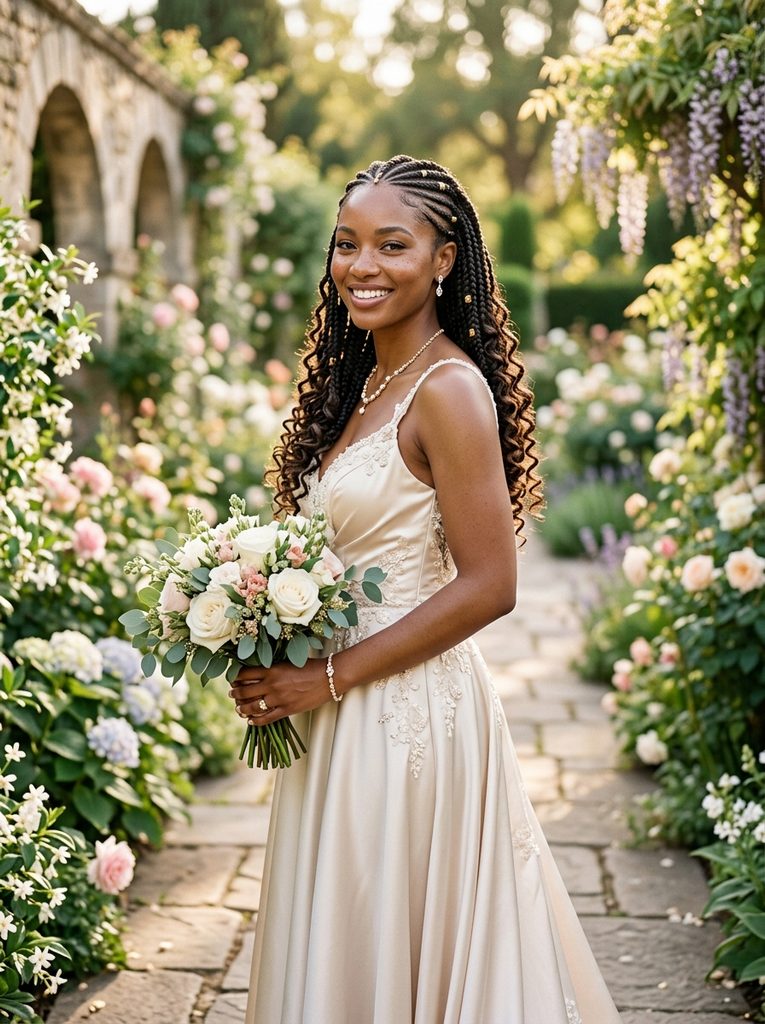
Face-framing braids can make a traditional Fulani layout feel softer and more personalized. A few slim braids can fall beside the temples or cheeks while the remaining hair follows the main braid pattern.
You can finish these pieces with small beads, cuffs, or simply leave them plain. The choice changes the overall mood without requiring a completely different installation.
Keep the Pieces Fine
Thinner face-framing braids usually create a more delicate appearance. They can also be easier to position around the face without making the hairstyle feel crowded.
6. Fulani Goddess Braids With Curly Ends
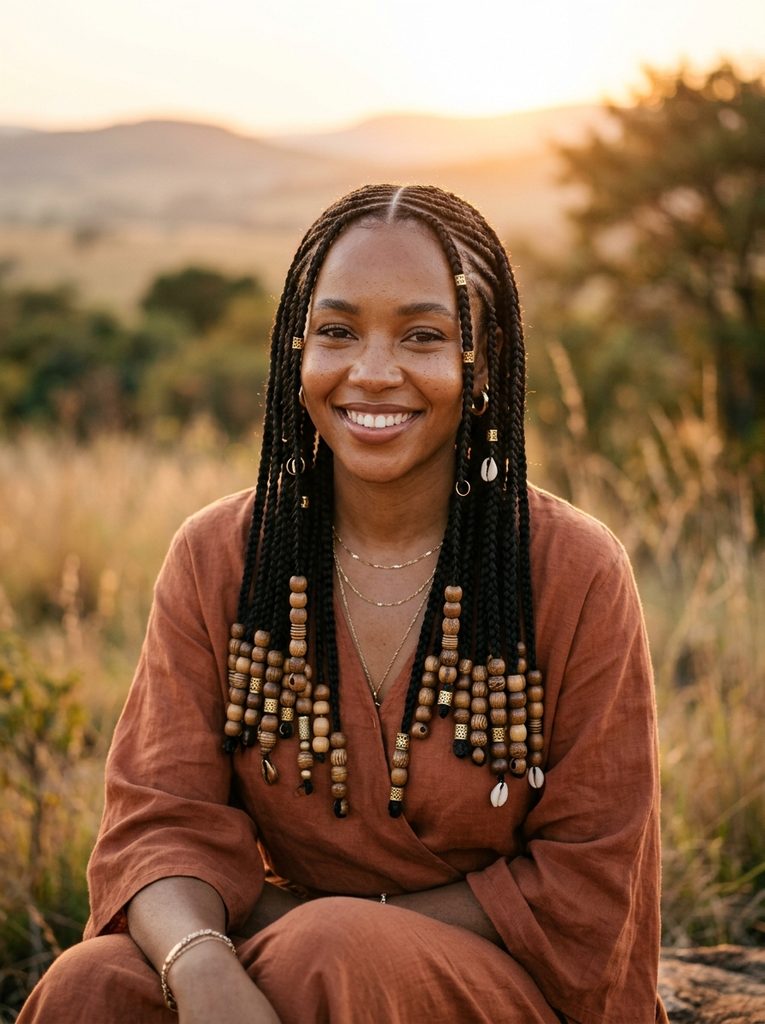
Goddess-inspired Fulani braids combine a structured cornrow pattern with fuller braids and loose curls. The curls can be concentrated at the ends or mixed more freely throughout the longer sections.
This gives the hairstyle a romantic quality that works particularly well for weddings, engagement celebrations, vacations, and evening events.
Choose One Main Texture
If the curls are very defined, keep the braid pattern relatively clean. Too many competing textures can make the style look busy instead of intentional.
7. Fulani Braids With Geometric Parts
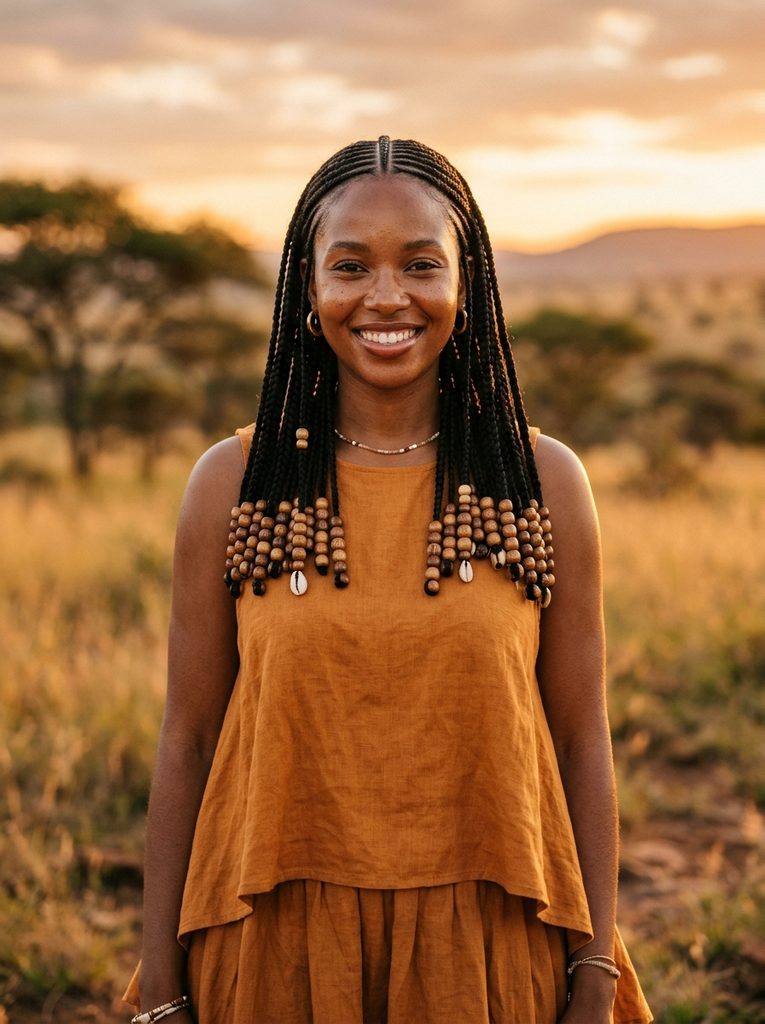
Geometric Fulani braids turn the scalp pattern into the main feature. Triangles, curved sections, zigzags, and intersecting parts can be incorporated around the traditional center structure.
This is a good choice if you enjoy detailed hairstyles and want your next installation to look custom rather than following a basic pattern.
Don’t Overcrowd the Design
A complicated parting pattern already creates visual interest. Keep the accessories simple so the geometry remains easy to see.
8. Fulani Braids With Wooden Beads
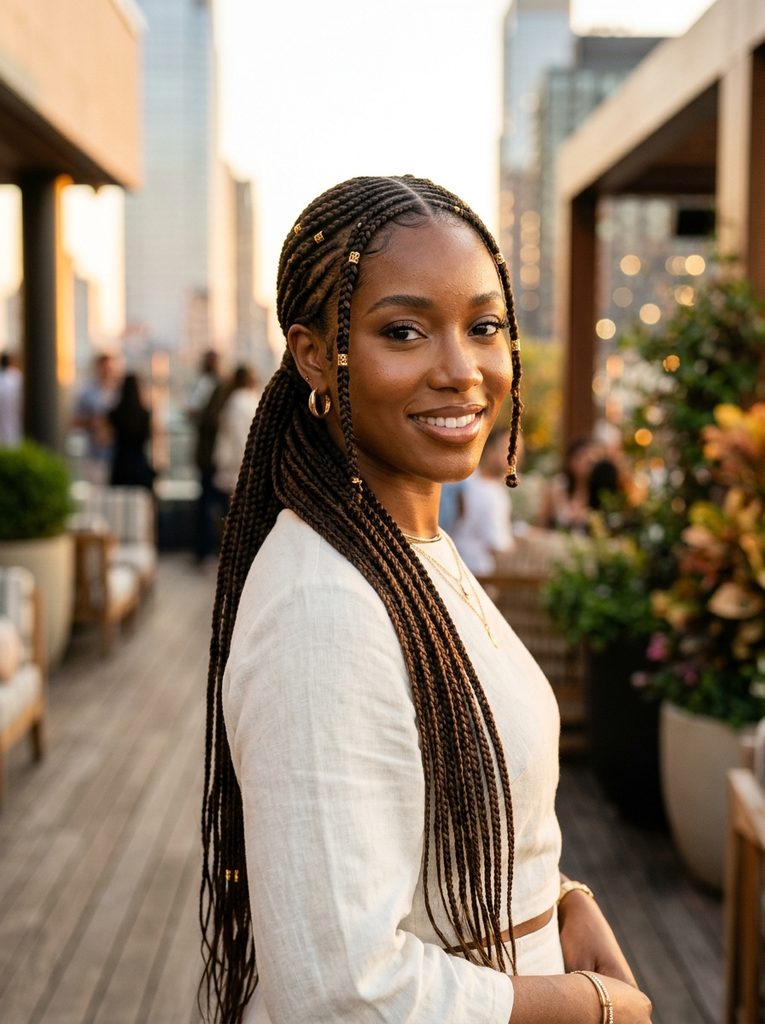
Wooden beads give Fulani braids a warmer, more natural finish than shiny metallic accessories. They work especially well with earthy clothing, linen outfits, neutral makeup, and warm brown hair colors.
You can use beads on the face-framing braids or distribute a smaller number throughout the longer individual braids.
Match the Bead Size to the Braid
Large beads can overwhelm fine braids, while tiny beads may disappear against thicker sections. Ask your stylist to choose an accessory size that fits the braid width.
9. Fulani Braids With a Low Ponytail
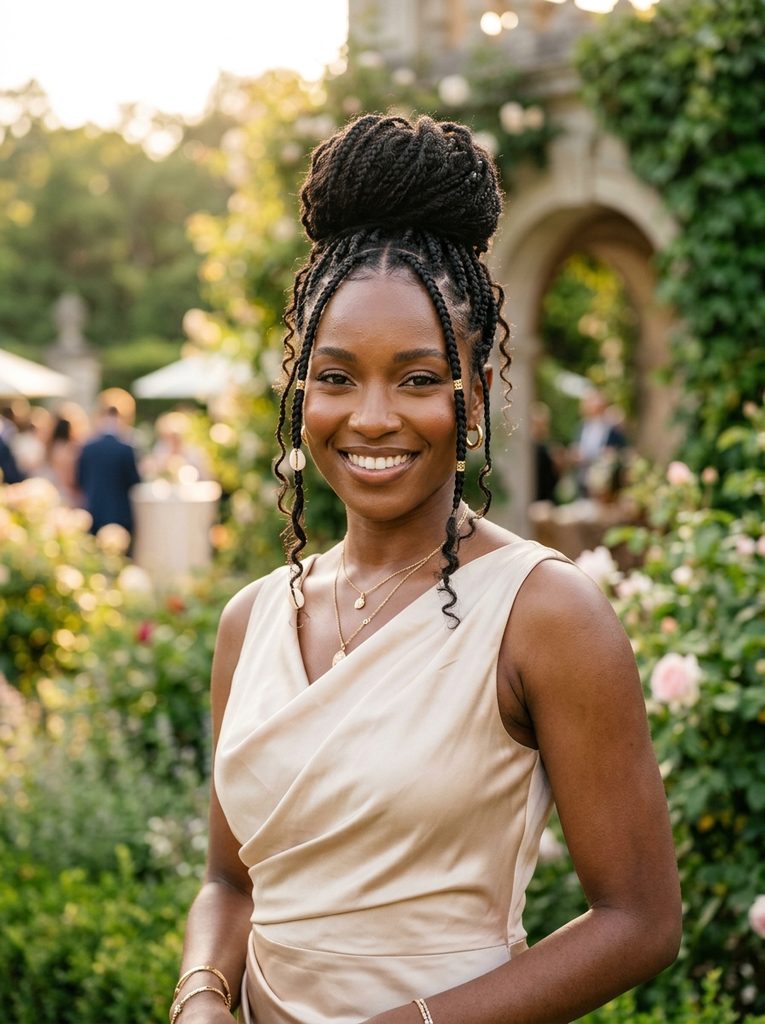
A low ponytail gives Fulani braids a polished finish while keeping the intricate pattern around the crown visible. The front can feature the classic center part and face-framing braids, while the remaining length is gathered neatly at the nape.
This is an easy option for work, dinners, weddings, and occasions when you want something more refined than wearing the braids completely loose.
Wrap the Base
Use one braid around the ponytail base to hide the elastic and create a cleaner finish. Keep the ponytail comfortable rather than pulling the entire installation tightly backward.
For more gathered hairstyle ideas, explore Ponytail Hairstyle Ideas.
10. Fulani Braids With a High Bun
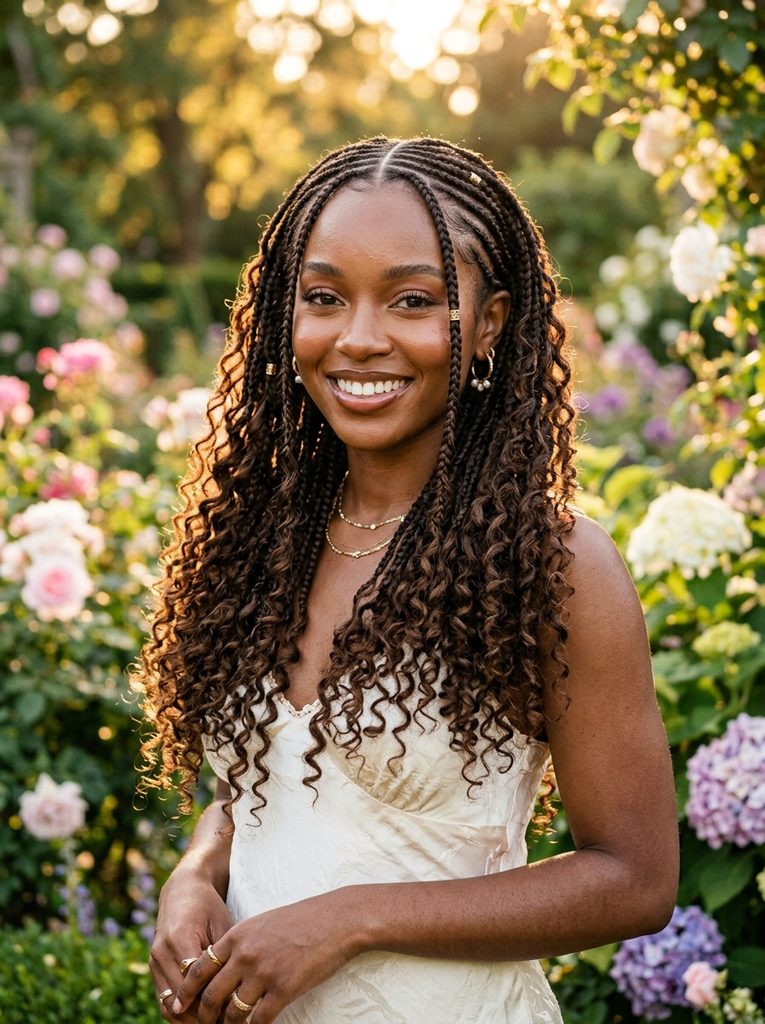
Gathering Fulani braids into a high bun creates an elegant silhouette that puts the braid pattern around the face and crown on full display. The bun can be tightly arranged for a polished formal look or kept slightly fuller for a softer finish.
This style works especially well for weddings, graduation celebrations, formal dinners, and warm-weather occasions when you want the hair lifted away from your neck.
Keep the Bun Proportional
Very long braids can create a large amount of weight when gathered into one bun. Choose the bun size according to your braid length and avoid excessive pulling at the roots.
For more ways to style braided hair into an updo, see Bun Hairstyles Ideas.
11. Fulani Braids With Curly Ends
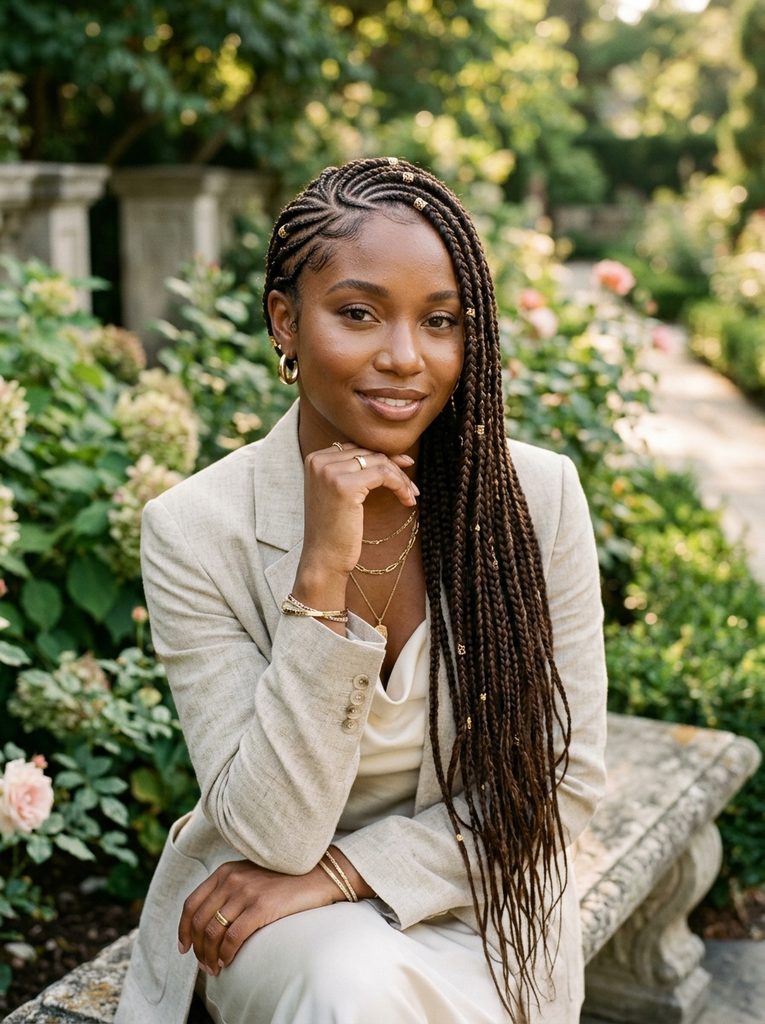
If you love the structure of Fulani braids but want additional softness, let the individual braids transition into loose curls at the ends. The contrast between neat cornrows and flowing curls gives the hairstyle more movement.
You can keep the curls subtle for everyday wear or make them fuller for a special occasion. The curl pattern can also be changed later without altering the main braid design.
Keep the Curls Separate
When refreshing the hairstyle, concentrate your curl product on the loose sections instead of coating the entire braided installation. This helps preserve the definition without unnecessary buildup.
For another braid style featuring flowing curls, see French Curl Braids.
12. Fulani Braids With a Side Part
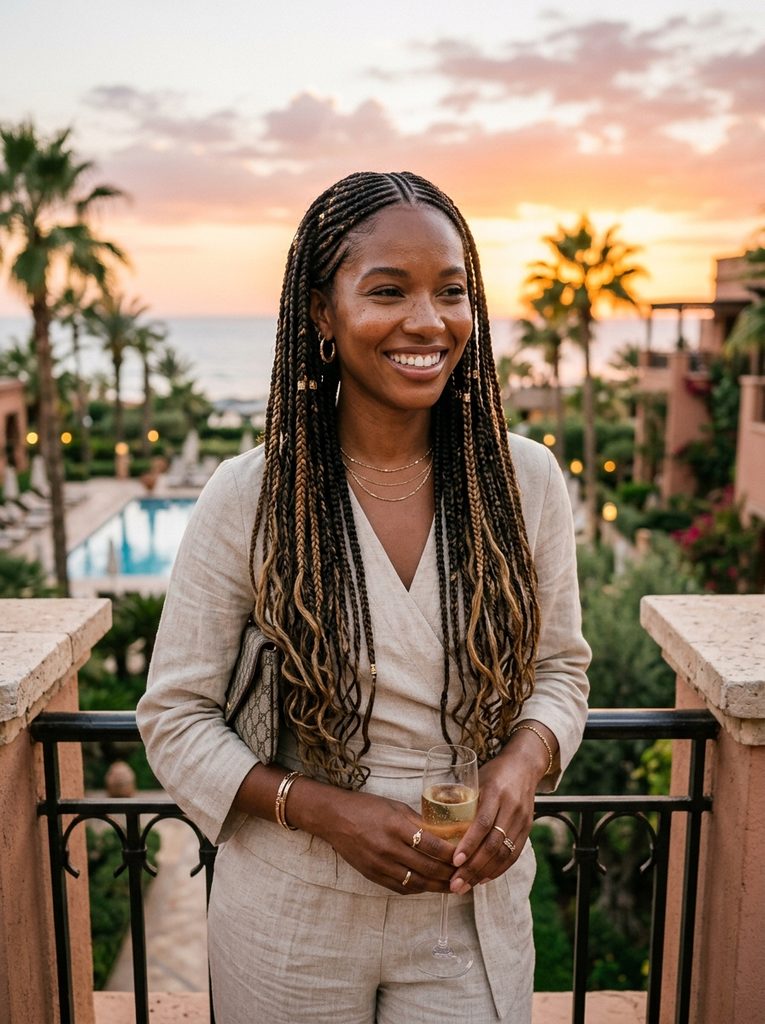
A side-parted Fulani design creates an asymmetrical alternative to the traditional center-part arrangement. The braids can follow curved lines around the side of the head while individual braids fall naturally toward one shoulder.
This can make the overall hairstyle feel more contemporary while still retaining recognizable Fulani-inspired elements.
Let the Part Guide the Pattern
The side part should be planned before the braiding begins. Decide how dramatic you want the asymmetry to be and where you want the longest braids to fall.
13. Fulani Braids With Caramel Highlights
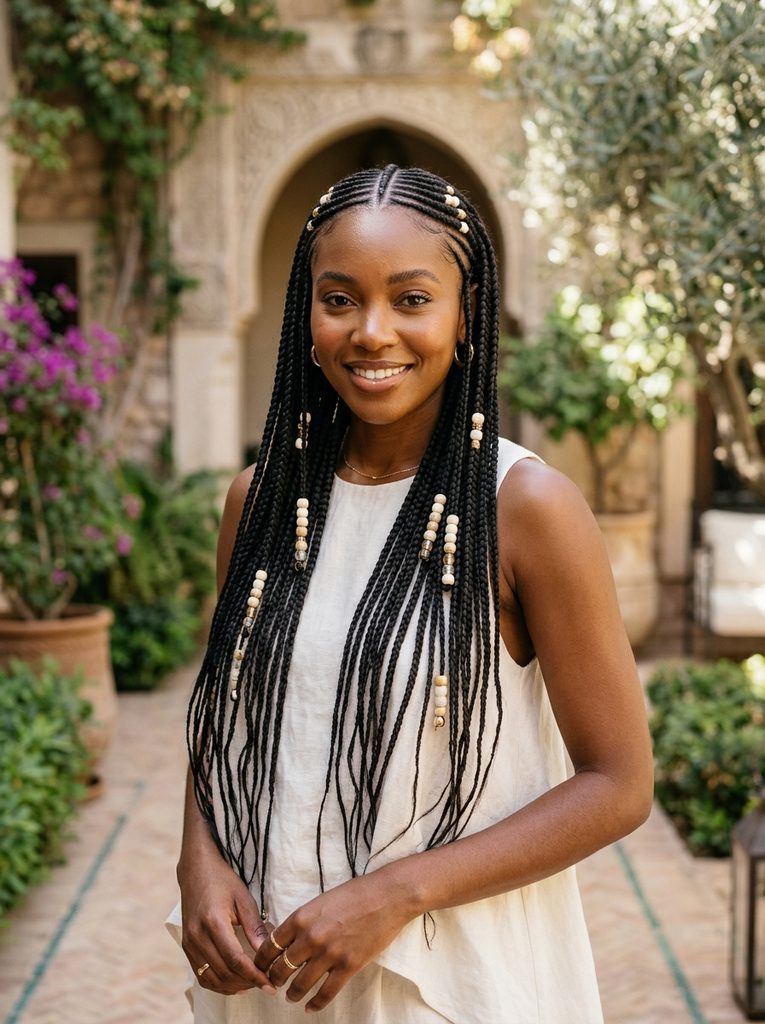
A few caramel or honey-colored extensions can add dimension without changing the entire hairstyle. Strategic highlights look particularly attractive through the individual braids because they become more visible as the hair moves.
You can place lighter pieces near the front for a subtle face-brightening effect or distribute them throughout the longer braids for a more noticeable color contrast.
Keep the Color Intentional
Choose one or two complementary shades rather than mixing too many colors. A consistent palette will keep the braid pattern looking refined.
14. Fulani Braids With White or Neutral Beads
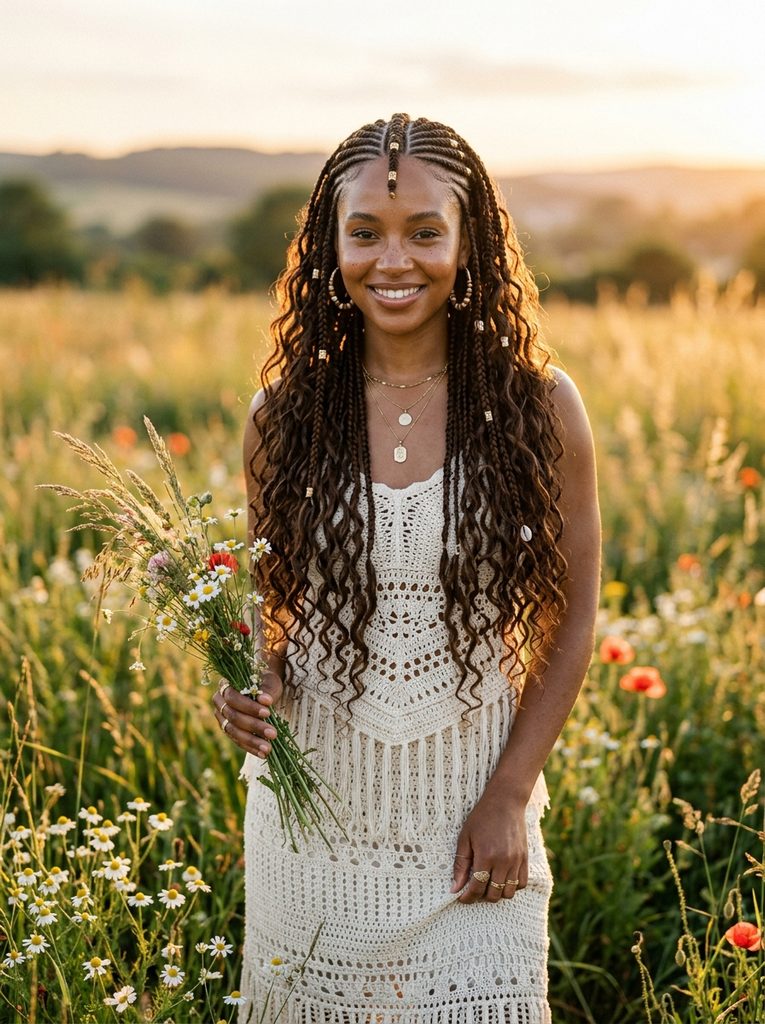
Neutral beads offer a softer alternative to traditional metallic or colorful accessories. White, cream, ivory, or translucent beads can create a clean contrast against dark braids without making the hairstyle feel overly decorated.
This version works especially well with minimalist outfits and is easy to adapt for summer events, vacations, celebrations, and photoshoots.
Match Beads to Your Outfit
If your clothing already includes warm or cool neutrals, use a similar tone in the beads. This small detail can make the entire look feel coordinated.
15. Fulani Braids With Boho Texture
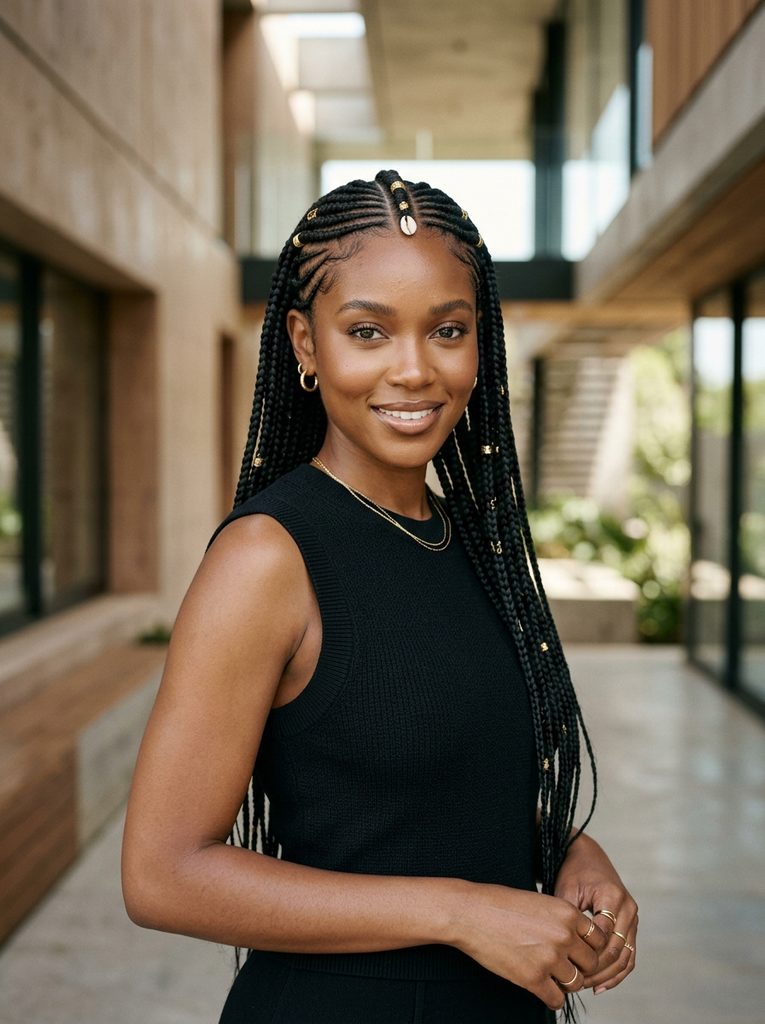
A boho-inspired Fulani hairstyle keeps the structured front braid pattern but introduces loose curly or wavy pieces throughout the longer sections. The result feels less uniform and more relaxed than a traditional installation.
This is a strong choice if you like the visual identity of Fulani braids but prefer hairstyles with movement and a softer finish.
Let the Texture Stay Natural
Do not try to make every loose curl identical. Slight differences in curl direction and size can help create the relaxed appearance that makes this variation work.
For another relaxed braided style, you can explore Boho Braids for Long Hair.
16. Fulani Braids With Stitch Cornrows
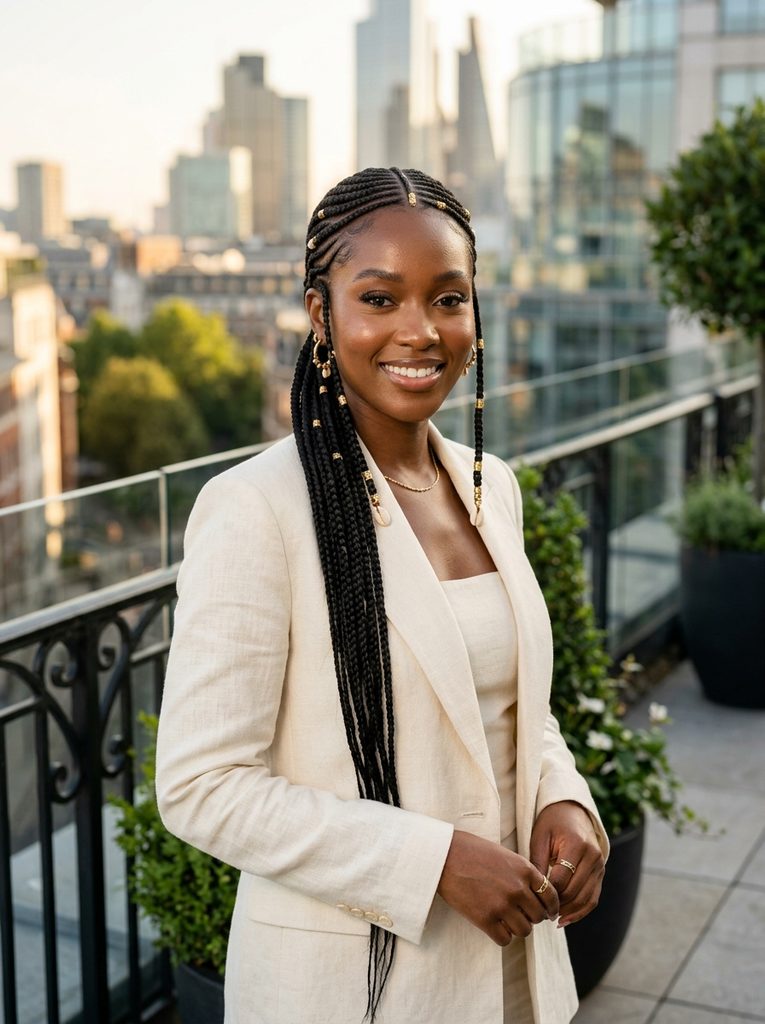
Adding stitch-style cornrows to the Fulani pattern creates sharper, more defined lines. The stitch sections can be used around the center part or along the sides before transitioning into individual braids.
This combination works particularly well if you prefer a neat, modern hairstyle with a clearly visible scalp pattern.
Keep the Sections Consistent
Stitch designs depend heavily on clean parting. Ask your stylist to keep the section sizes intentional so the finished pattern looks balanced from both sides.
17. Fulani Braids With a Braided Ponytail
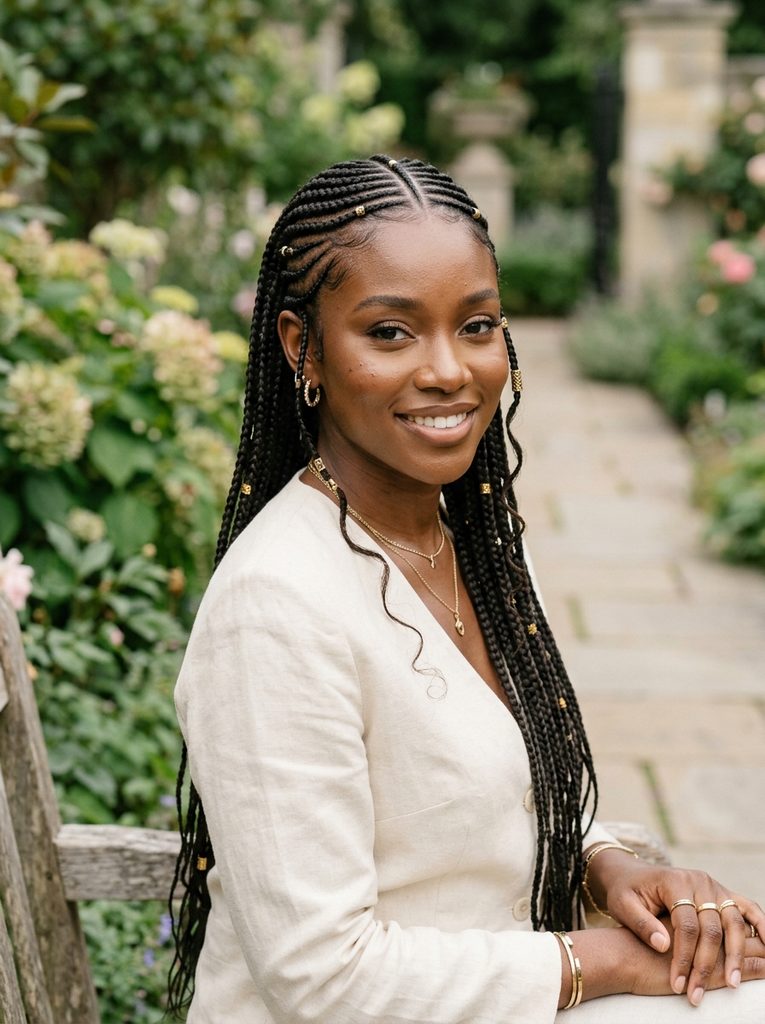
Instead of leaving the back completely loose, gather the individual braids into a long braided ponytail. This creates a streamlined shape while allowing the detailed Fulani pattern around the crown to remain visible.
It is especially useful when you want a hairstyle that feels controlled for travel, work, or a formal event.
Keep the Ponytail Low or Mid-Height
A low or medium ponytail can create a polished look without placing as much upward pull on the hairline as a very high ponytail.
18. Fulani Braids With Small Side Braids
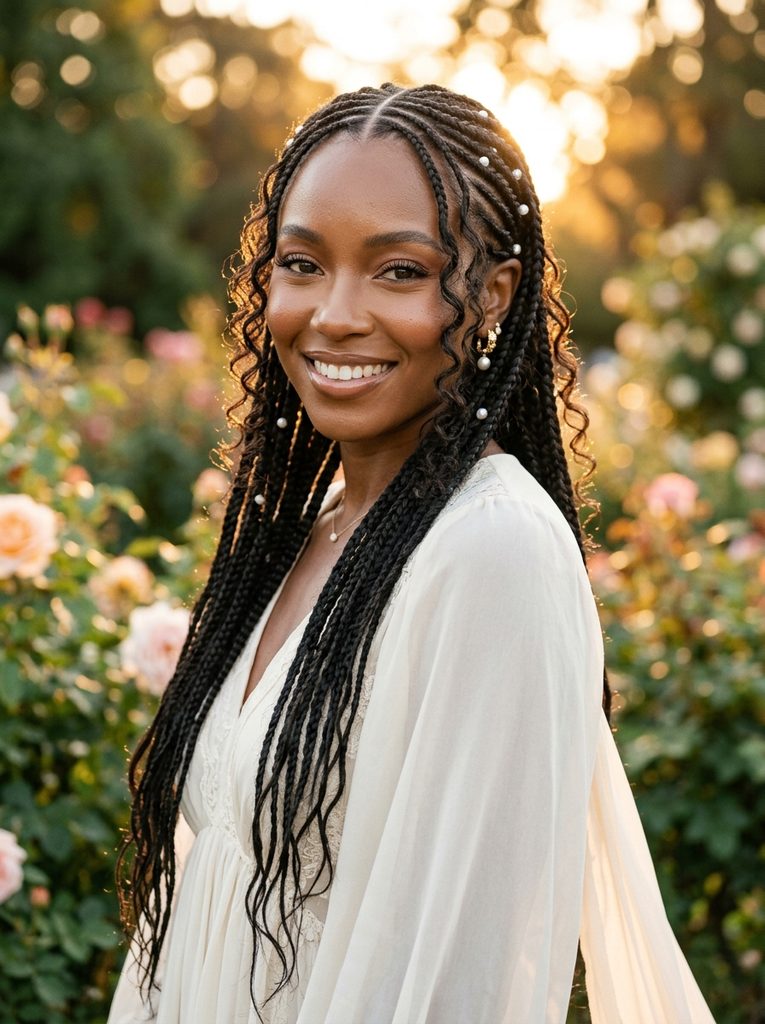
Small accent braids around the sides can add another layer of detail without changing the main Fulani pattern. These narrow sections can curve toward the ears or follow the temples before joining the longer braids.
The look is particularly effective when the main braids remain relatively simple, allowing the smaller sections to act as decorative details.
Use Contrast in Braid Size
Pairing thin accent braids with medium-sized main rows creates visual hierarchy. The eye naturally follows the smaller details without losing the overall shape of the hairstyle.
19. Fulani Braids With Soft Face-Framing Curls
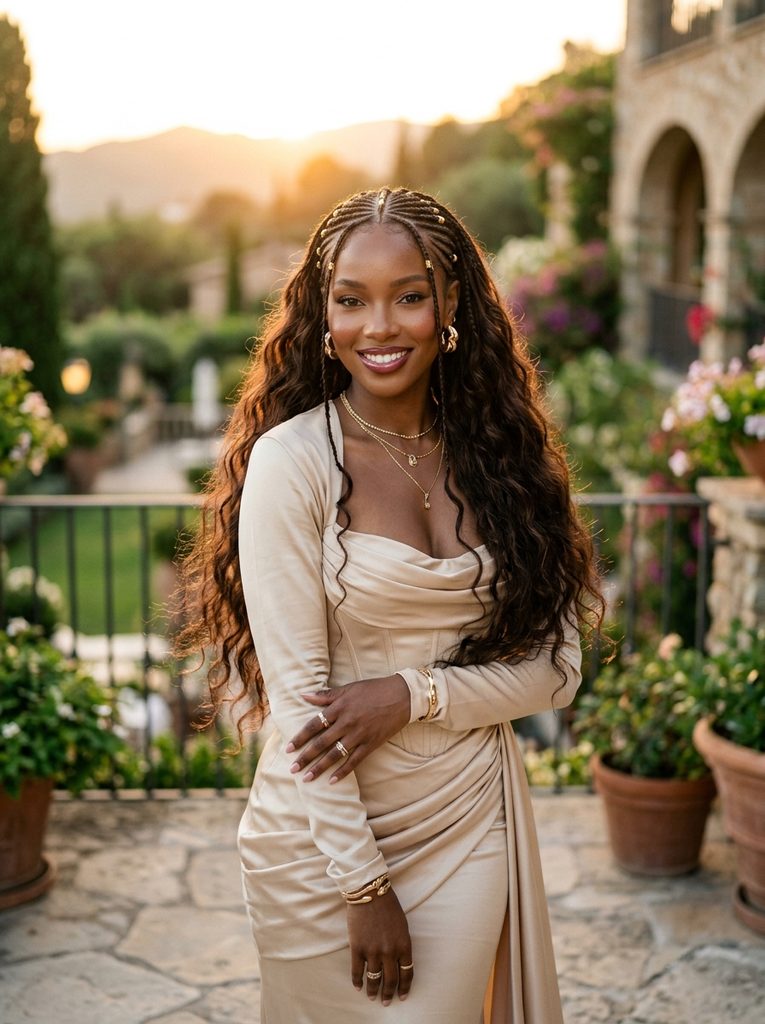
A few loose curls around the face can soften an otherwise structured Fulani installation. Keep the main braids neat while allowing selected curly pieces to fall around the cheekbones and jawline.
This creates a romantic finish without requiring a completely boho installation.
Don’t Overdo the Loose Pieces
Two or three intentional face-framing sections can be enough. Too many loose pieces may hide the braid pattern and make the hairstyle harder to manage.
20. Fulani Braids With a Long Weave Finish
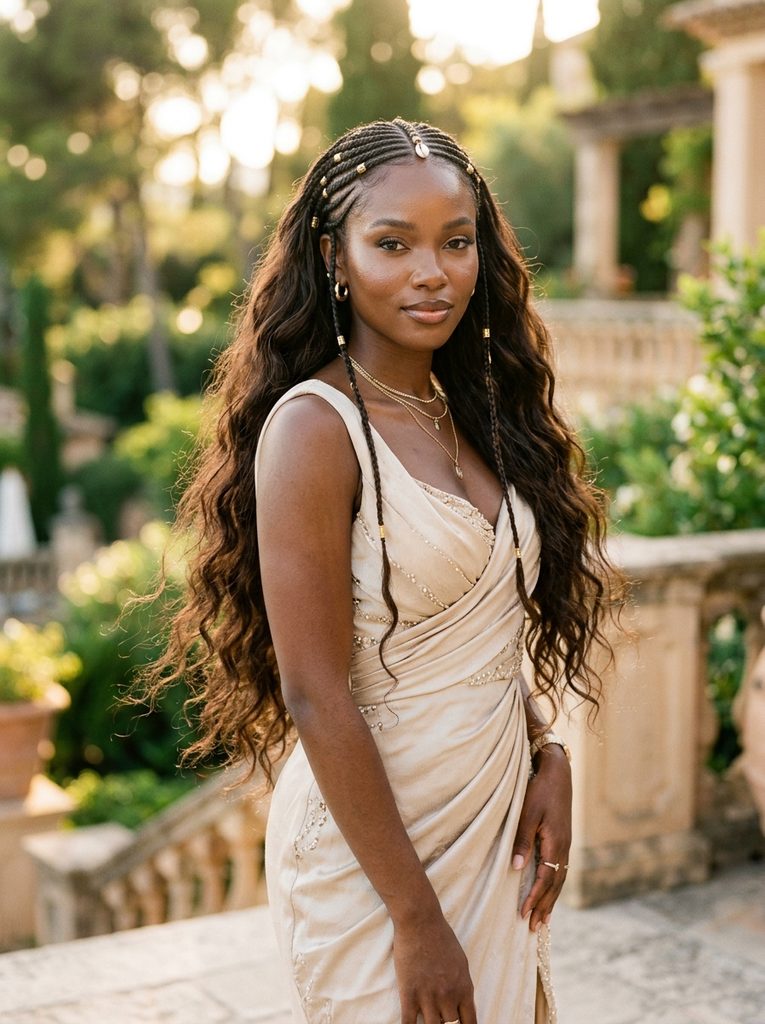
A Fulani-inspired braided front can be combined with a longer loose or wavy weave at the back. This gives you the distinctive braided detail around the crown while creating a completely different silhouette through the lengths.
It can be a good option if you want some of the visual character of Fulani braiding without having every section of the head covered in individual braids.
Match the Textures Carefully
The transition between the braided sections and the weave should look intentional. Choose a texture that works with the braid pattern rather than creating a noticeable contrast at the point where the two meet.
How to Choose the Right Fulani Braid Style
Start by deciding which part of the Fulani aesthetic you like most.
If you love the traditional appearance, look for center-part designs with symmetrical cornrows, individual braids, and carefully placed beads.
If you prefer a modern finish, consider knotless techniques, stitch sections, geometric parting, or a side-part design.
For a softer hairstyle, choose boho curls, goddess-inspired braids, or a few face-framing curly pieces.
For a formal occasion, a braided bun, low ponytail, pearls, or subtle metallic accessories can make the style feel more polished.
For everyday wear, medium-sized braids with a manageable length may be easier to maintain than an extremely long or heavily accessorized installation.
Also consider your natural hair density and scalp comfort before choosing the braid size and extension length.
How to Maintain Fulani Braids
A good nighttime routine can help keep your braids and accessories looking neat. Cover the hairstyle with a satin or silk scarf or bonnet before sleeping to reduce friction.
Keep the scalp clean according to your normal hair-care routine. If you use oils or moisturizing products, avoid applying excessive amounts that can create buildup around the braid bases.
Pay extra attention to any loose curls. They may need occasional gentle refreshing depending on the extension hair and curl pattern.
Most importantly, pay attention to tension. If your scalp hurts, your hairline feels sore, or you notice bumps or thinning around the edges, speak with your stylist. Keeping a braid style in longer is not worth continuing if your scalp or hairline is showing signs of stress.
Fulani Braid Accessories That Work Well
Accessories can completely change the mood of a Fulani hairstyle.
Gold beads: Best for a polished, luxurious finish.
Wooden beads: Work beautifully with earthy and natural outfits.
Pearls: Create a romantic option for weddings and special events.
Metal cuffs: Add a modern fashion-forward detail without covering the braid pattern.
Colored beads: Useful when you want the hairstyle to coordinate with a particular outfit or event.
The strongest looks usually use accessories as accents rather than covering every braid.
Fulani Braids for Different Occasions
For everyday wear: Try classic center-part braids, medium individual braids, or a simple beaded design.
For work: A clean center-part installation gathered into a low ponytail or bun can look polished without being overly elaborate.
For weddings: Consider pearl details, goddess textures, a braided bun, or soft curls.
For graduation: Keep the braid pattern neat and choose a style that works comfortably with your graduation cap. You can also explore Graduation Hairstyles Ideas for additional options.
For vacations: Long Fulani braids, beads, boho curls, and warm color combinations work especially well with relaxed summer clothing.
For summer: Consider a bun or ponytail if you prefer to keep the longer braids away from your neck.
Fulani Braids and Scalp Comfort
A beautiful braid pattern should not require you to ignore scalp pain. The American Academy of Dermatology warns that hairstyles that repeatedly pull on the hair can contribute to traction alopecia, and recommends avoiding styles that hurt or feel excessively tight.
This is especially important with detailed Fulani designs because the hairstyle can involve several directional braids and extensions.
Before the installation begins, tell your stylist if your edges are fragile or if you have previously experienced discomfort from tight braids. During installation, speak up if the style hurts.
A comfortable installation is a better choice than simply choosing the longest-lasting or most elaborate design.
Fulani Braid Hairstyles FAQ
What are Fulani braid hairstyles?
Fulani braid hairstyles are styles associated with Fulani/Fula braiding traditions and commonly feature combinations of cornrows, individual braids, center or side parting, face-framing sections, and decorative elements such as beads. Modern versions can vary considerably in pattern and finish.
What makes Fulani braids different from regular cornrows?
Traditional Fulani-inspired designs often combine different braid directions and sizes, with individual braids, a central part or central braid, face-framing sections, and decorative accessories. A basic cornrow style may use simpler rows running in one direction.
Can Fulani braids include beads?
Yes. Beads are one of the most recognizable decorative elements associated with many Fulani-inspired braid designs. You can choose gold, wooden, neutral, colorful, or other lightweight options depending on the look you want.
Can I get Fulani braids without beads?
Absolutely. Beads are optional. A clean center part, carefully designed cornrows, and individual braids can create a beautiful Fulani-inspired look without any accessories.
Are Fulani braids protective?
Braids can reduce daily manipulation, but that does not mean every installation is automatically protective. Excessive tension, heavy extensions, and repeated tight styling can put stress on the hair and scalp.
How long do Fulani braids last?
There is no single timeframe that applies to every installation. Longevity depends on braid size, hair type, extension hair, installation technique, scalp care, and daily activity. Rather than following a fixed number of weeks, pay attention to how your scalp and natural hair feel.
Can Fulani braids be styled into a bun?
Yes. Long Fulani braids can be gathered into high or low buns. Keep the bun comfortable and avoid repeatedly pulling the braids tightly upward.
Can Fulani braids include curly hair?
Yes. Modern variations often combine the structured braid pattern with curly ends, loose curls, or boho-style texture. The amount of curl can range from a few face-framing pieces to a much fuller curly finish.
Are Fulani braids suitable for special occasions?
Yes. They can be adapted for weddings, graduations, birthdays, vacations, formal dinners, and other events. Beads, pearls, cuffs, curls, buns, and ponytails can all change the overall feel.
Final Thoughts
Fulani braid hairstyles offer an incredible range of possibilities, from classic center-part designs with beads to modern knotless patterns, geometric sections, soft curls, goddess textures, buns, ponytails, and weave combinations.
The beauty of the style comes from the details. The direction of the braids, the size of each section, the placement of accessories, the amount of loose texture, and even the color can completely change the final result.
Before your next appointment, save two or three reference photos and discuss the braid size, length, extension weight, pattern, and tension with your stylist. If you want a particular traditional or cultural design, understanding the inspiration behind it can also help you choose and describe the style respectfully.
Most importantly, don’t sacrifice scalp comfort for a hairstyle. The best Fulani braid look is one that makes you feel confident while allowing your natural hair and scalp to remain comfortable underneath.